

Manchester Science Park Innovation, Workspaces and Business Growth
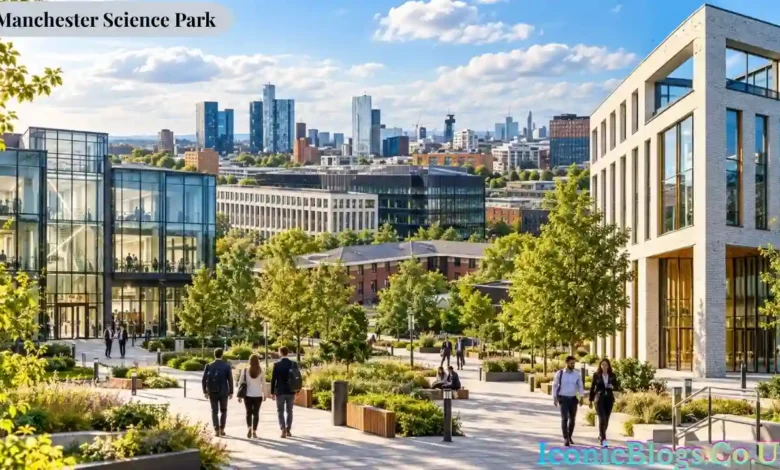
Manchester Science Park is a major science, technology and innovation campus in Manchester, providing specialist offices, laboratories, makerspaces and business support for start-ups, scale-ups and established companies. Located in Manchester’s Oxford Road Corridor, the park brings businesses closer to universities, healthcare organisations, researchers and a large community of technology and life-science companies.
Rather than operating as a single office building, the campus consists of several different properties designed for businesses at different stages of growth. Its facilities range from flexible workspace and specialist laboratories to advanced manufacturing and prototyping areas.
What Is Manchester Science Park?
Manchester Science Park, often shortened to MSP, is a specialist business and innovation campus focused primarily on science and technology companies.
It supports businesses working in areas such as:
- Life sciences
- Biotechnology
- Medtech
- Digital technology
- Cybersecurity
- Advanced materials
- Artificial intelligence
- Energy technology
- Diagnostics
- Software development
- Advanced manufacturing
The campus currently supports a community of more than 150 businesses ranging from early-stage ventures and university spin-outs to larger international companies.
This combination of workspace and specialist infrastructure is important because many technology companies need considerably more than conventional office space. A life-science company may need laboratories, while an engineering or product-development company may require workshop and prototyping facilities.
Manchester Science Park attempts to bring these different requirements together within the same innovation ecosystem.
Where Is Manchester Science Park?
Manchester Science Park is located around the Oxford Road Corridor, one of Manchester’s main concentrations of academic, medical, research and technology organisations.
The campus sits close to major organisations including universities and healthcare institutions, while Manchester city centre is also nearby. Bruntwood SciTech describes the location as being within Europe’s largest clinical academic campus.
Several Manchester Science Park buildings are spread around Lloyd Street North, Pencroft Way, Guildhall Close and surrounding streets.
That location is one of the park’s biggest practical advantages.
Businesses can potentially benefit from proximity to:
- Academic researchers
- University graduates
- Healthcare professionals
- Research facilities
- Investors
- Technology companies
- Specialist suppliers
- Potential commercial partners
For companies dependent on research collaboration or highly skilled recruitment, being located inside an established innovation district can be particularly useful.
Why Manchester Science Park Matters to the City’s Innovation Economy
Manchester already has a substantial academic and technology ecosystem.
Manchester Science Park adds dedicated commercial infrastructure where businesses can develop products, conduct research, recruit specialists and expand their operations.
The basic idea behind a science park is straightforward: innovative companies tend to benefit when universities, businesses, laboratories, investors and skilled workers operate close to one another.
Instead of functioning purely as commercial property, MSP is designed around an ecosystem model.
Companies working there can potentially interact with businesses facing similar challenges, attend events, access specialist support and connect with organisations elsewhere in Manchester’s research community.
For young companies in particular, these connections can sometimes be as important as the physical workspace itself.
Manchester Science Park Buildings and Facilities
Manchester Science Park includes several buildings serving different types of businesses.
Some focus largely on technology and office-based companies, while others provide laboratory infrastructure or specialist facilities for companies working with physical products.
| Building | Best Suited For | Key Features |
|---|---|---|
| Base | Technology, advanced materials and product businesses | Offices, makerspace and collaboration areas |
| Bright Building | Digital and technology companies | Flexible offices, meeting rooms and communal areas |
| Enterprise House | Start-ups and spin-outs | Flexible office and laboratory space |
| Greenheys | Growing life-science companies | Specialist laboratories and office space |
Individual workspace availability can change, so companies considering relocation should assess each building according to their technical and operational requirements.
Base Manchester Science Park
Base Manchester Science Park is one of the campus’s most recognisable newer developments.
Base was developed specifically for high-growth technology companies working in sectors including energy, technology, software, gaming, animation and advanced manufacturing.
The five-storey development provides approximately 91,000 sq ft of space and was completed in 2022.
Its design reflects an important shift in the technology sector.
Many technology businesses no longer operate entirely from desks. Companies developing hardware, robotics, clean technology, advanced materials or connected devices may need somewhere to design, prototype and test physical products.
Base combines conventional workspace with facilities designed around these requirements.
What Does Base Offer?
Facilities associated with Base include:
- Grade A office space
- Managed and leased workspace
- Makerspace and prototyping facilities
- Meeting rooms
- Breakout areas
- Cycle storage
- Showers and changing facilities
- Event areas
- Roof terrace space
Bruntwood SciTech also states that bespoke laboratory space can be incorporated for certain companies where required.
This makes Base potentially attractive to businesses sitting somewhere between traditional technology companies and manufacturing or laboratory-based organisations.
The Bright Building
The Bright Building functions as one of the central community hubs within Manchester Science Park.
It provides flexible office space alongside shared areas intended to encourage interaction between companies.
Facilities include meeting rooms, event areas, informal breakout spaces, a gym, outdoor areas, cycle facilities and showers.
The building has also been used as a technology test environment, incorporating smart energy infrastructure including battery-storage technology.
For digital businesses that do not require extensive specialist laboratories, this type of collaborative workspace can offer a practical balance between private office space and access to the broader science-park community.
Enterprise House
Enterprise House is particularly relevant to start-ups, spin-outs and smaller science or technology businesses.
Manchester Science Park promotes the building as providing flexible office and laboratory space suitable for companies that may still be developing their commercial operations.
Flexibility can be particularly important for young science companies.
An early-stage biotechnology business, for example, may begin with a relatively small team but require significantly more laboratory and office space after securing investment or entering clinical development.
A location capable of supporting several stages of company growth can reduce the disruption associated with repeatedly relocating.
Greenheys and the Growth of Life Sciences
Greenheys represents another major stage in the development of Manchester Science Park.
The purpose-built development is focused on growing life-science businesses working in areas such as:
- Biotechnology
- Genomics
- Diagnostics
- Precision medicine
- Health innovation
The development provides specialist CL2 laboratory environments alongside supporting office space. Its technical specifications include enhanced ventilation, cooling, laboratory infrastructure and connectivity designed around demanding scientific operations.
Bruntwood SciTech announced the completion of Greenheys in July 2026, making it one of the latest significant additions to the Manchester Science Park campus.
The building also reflects the increasing demand for purpose-built laboratory space outside the traditional research institutions themselves.
Office Space at Manchester Science Park
Not every company located at a science park needs a laboratory.
Many software, cybersecurity, digital-health and technology firms primarily require high-quality office space with strong connectivity and access to specialist networks.
Manchester Science Park therefore provides several types of working environments.
Depending on the building and availability, these can include:
Managed Offices
Managed workspace can suit businesses wanting a relatively simple move-in process without taking responsibility for every aspect of office management.
It may be useful for businesses expanding quickly or entering Manchester for the first time.
Leased Offices
More established organisations may prefer conventional leased space that gives them greater control over layout and branding.
This option can make sense when headcount and long-term space requirements are relatively predictable.
Flexible Workspace
Smaller companies may require flexibility while they test markets, recruit staff or raise capital.
Flexible arrangements can reduce the commitment involved in taking significantly larger premises before the business genuinely needs them.
Laboratory Space at Manchester Science Park
Laboratory requirements vary enormously between businesses.
A digital-health company may primarily need office space, whereas biotechnology and diagnostics organisations can require specialist environments, ventilation systems, controlled access and higher technical specifications.
Manchester Science Park provides laboratory options intended to support these more specialised businesses.
Its wider campus offering includes both lab and office space, while buildings such as Greenheys have been specifically designed around expanding life-science organisations.
When comparing laboratory locations, companies should consider much more than rental cost.
Important questions include:
- What laboratory classification is supported?
- Are ventilation requirements covered?
- Is specialist power available?
- What floor loading is permitted?
- Can gases be safely distributed?
- Is expansion space available?
- Are office and laboratory teams able to remain together?
- What security arrangements exist?
- How reliable is connectivity?
These operational requirements can quickly become more important than headline rental prices.
Makerspace and Prototyping Facilities
One distinguishing feature of Base is its makerspace capability.
Makerspaces provide environments where businesses can develop, modify and test physical products.
This can be useful for companies working with:
- Hardware
- Internet of Things devices
- Advanced materials
- Electronics
- Clean technology
- Manufacturing technology
- Engineering prototypes
For companies developing physical products, moving between separate office, workshop and testing locations can slow development.
Having these functions within the same innovation campus can make collaboration between engineers, designers and commercial teams easier.
Business Support and Networking
Successful innovation campuses are usually built around more than property.
Manchester Science Park also promotes specialist business support and connections within the broader Bruntwood SciTech network.
Potential support areas can include connections to:
- Investors
- Talent
- Universities
- Professional services
- Customers
- Research partners
- Innovation programmes
Events and shared meeting spaces also provide opportunities for businesses occupying different buildings to interact.
These informal connections can be particularly valuable for founders who might otherwise operate within relatively isolated teams.
Who Should Consider Manchester Science Park?
Manchester Science Park can suit several different types of organisations.
Technology Start-Ups
Young technology businesses may value flexible workspace, networking and proximity to Manchester’s talent pool.
University Spin-Outs
Companies emerging from academic research often need commercial workspace without losing access to research networks.
Science parks can offer a useful bridge between universities and independent commercial operations.
Life-Science Businesses
Biotech, diagnostics, genomics and medtech companies may benefit from purpose-built laboratory infrastructure.
Scale-Ups
A business that has secured substantial funding can face a difficult property problem: it may need to increase headcount rapidly without knowing precisely how large it will eventually become.
A multi-building campus can potentially provide more expansion options than a single standalone office.
Larger Corporations
Established companies may also use science parks to place innovation, research or technology teams closer to specialist universities and emerging companies.
Advantages of Manchester Science Park
Manchester Science Park offers several potential advantages.
Access to an innovation community:
Businesses operate alongside other science and technology organisations rather than in a general-purpose commercial estate.
Specialist property:
Companies can access laboratories, offices and makerspaces within the broader campus.
Research connections:
Its Oxford Road Corridor location puts companies close to Manchester’s academic and healthcare infrastructure.
Recruitment potential:
Proximity to universities can help businesses access graduate and specialist talent.
Room for different business stages:
The campus supports organisations ranging from early-stage start-ups to larger companies.
Meeting and event facilities:
Shared infrastructure can reduce the need for companies to maintain large internal event spaces.
Possible Limitations to Consider
Manchester Science Park will not automatically be the right location for every organisation.
Companies should compare the benefits against their individual requirements.
Specialist Space Can Cost More
Purpose-built laboratories and high-specification technology facilities are inherently more complex than ordinary offices.
Businesses should calculate total occupancy costs rather than comparing only basic rent.
Not Every Company Needs an Innovation Campus
A small consultancy or entirely remote software company may not use laboratories, makerspaces or scientific networks enough to justify locating within a specialist park.
Location Requirements Differ
Some businesses prioritise immediate proximity to major railway stations, while others care more about universities, laboratories or hospitals.
Companies should examine staff commuting patterns before making a decision.
Expansion Needs Must Be Planned
Rapid-growth companies should check whether appropriate additional laboratory or office space is likely to be available when they need it.
Manchester Science Park vs a Conventional Office
The biggest difference is the surrounding ecosystem.
| Feature | Manchester Science Park | Conventional Office |
|---|---|---|
| Standard office space | Yes | Yes |
| Specialist laboratory space | Available | Usually limited |
| Makerspace facilities | Available in selected buildings | Rare |
| Science and tech community | Strong focus | Depends on location |
| University proximity | Major advantage | Varies |
| Business support ecosystem | Specialist focus | Usually limited |
| Suitable for biotech | Potentially strong | Often unsuitable |
| Suitable for general businesses | Possible | Usually strong |
For a straightforward professional-services business, a conventional city-centre office may be perfectly adequate.
For a biotech company, advanced-materials start-up or hardware developer, specialist infrastructure can materially affect the decision.
Sustainability at Manchester Science Park
Sustainability has become increasingly important for both property developers and technology companies.
Base was designed with measures intended to reduce its carbon footprint, including solar power, smart energy-management technologies and efficient heating and cooling infrastructure. Bruntwood SciTech said the development was designed to achieve an EPC A rating.
Greenheys has also been developed around ambitious environmental standards, with Bruntwood SciTech targeting BREEAM Excellent, EPC A and net-zero construction and operation goals.
For businesses with corporate sustainability targets, the environmental performance of their workplace can increasingly influence property decisions.
Transport and Commuting
Manchester Science Park’s Oxford Road Corridor location offers access to one of Manchester’s busiest employment, education and healthcare areas.
The campus provides facilities for different commuting methods, including:
- Car parking
- Cycle storage
- Showers
- Changing facilities
- Cycle hubs and lockers
Public transport options vary depending on the exact building and journey.
Businesses considering the location should analyse where their employees actually live rather than assuming one commuting option works equally well for everyone.
A useful exercise is to map employee postcodes against realistic morning journey times before signing a long-term lease.
What Businesses Should Check Before Moving In
Choosing specialist workspace deserves careful due diligence.
Before committing to Manchester Science Park—or any science and technology campus—business owners should examine four broad areas.
1. Technical Requirements
Create a detailed list of everything your operation requires.
For laboratory companies, this might include:
- Ventilation
- Power
- Gas
- Security
- Waste handling
- Temperature control
- Loading capacity
For technology companies, connectivity and resilience may be more important.
2. Future Headcount
Do not choose workspace based only on today’s team.
Model your expected staffing requirements over the next two to three years.
3. Employee Travel
Check realistic commuting options during peak periods.
A prestigious building becomes far less attractive if key employees cannot reach it conveniently.
4. Expansion Flexibility
Ask what happens if your business doubles in size.
Finding suitable adjacent laboratory space can be substantially more difficult than simply adding desks to a conventional office.
Is Manchester Science Park Only for Scientists?
No.
Despite the name, Manchester Science Park supports a much broader technology ecosystem.
Companies operating there include organisations working in digital technology, cybersecurity, software, advanced materials, energy, gaming, animation, health technology and manufacturing-related fields as well as more traditional scientific sectors.
The more useful question is whether a company benefits from being part of an innovation-focused community.
A business developing new technology, products or scientific intellectual property is generally more aligned with the environment than a company simply looking for generic low-cost office space.
Is Base Manchester Science Park Different From Manchester Science Park?
Yes.
Manchester Science Park refers to the wider campus and business community.
Base Manchester Science Park is one particular building within that campus.
Base focuses strongly on high-growth technology, advanced materials, energy, digital products and businesses requiring both office and makerspace capabilities.
The distinction matters when searching for premises because facilities can vary significantly between individual MSP buildings.
The Wider Manchester Innovation Ecosystem
Manchester Science Park does not operate in isolation.
Its value is partly created by the concentration of research, healthcare, academic and commercial organisations surrounding the Oxford Road Corridor.
Companies can potentially recruit graduates from nearby universities, collaborate with researchers and interact with healthcare organisations and other technology businesses.
That density of expertise is one reason innovation districts have become an increasingly important part of economic-development strategies in major cities.
Physical proximity cannot guarantee collaboration, but it makes frequent interaction considerably easier.
How to Decide Whether Manchester Science Park Is Right for Your Business
Start with operational requirements rather than prestige.
A simple evaluation framework is:
Choose a specialist science and technology campus when you need:
- Laboratory infrastructure
- Prototyping space
- Research connections
- Technical talent
- Expansion options
- Innovation networks
A conventional office may make more sense when you primarily need:
- Low-cost desk space
- Maximum city-centre accessibility
- Little specialist infrastructure
- Limited physical product development
The best decision depends on how much value your business can realistically extract from the surrounding ecosystem.
FAQs About Manchester Science Park
What is Manchester Science Park?
Manchester Science Park is a specialist science and technology business campus in Manchester’s Oxford Road Corridor. It offers office space, laboratories, makerspaces and business support for start-ups, scale-ups and larger organisations.
Where is Manchester Science Park located?
It is located around the Oxford Road Corridor, south of central Manchester, close to major academic, healthcare and research institutions.
What is Base Manchester Science Park?
Base is a specialist technology building within Manchester Science Park. It provides office and makerspace facilities for companies working in areas including technology, advanced materials, energy, software, gaming and related sectors.
How big is Base at Manchester Science Park?
Base is approximately 91,000 square feet across five storeys.
Does Manchester Science Park have laboratory space?
Yes. Laboratory facilities are available across parts of the campus, including specialist life-science environments at Greenheys and flexible facilities elsewhere at Manchester Science Park.
Is Manchester Science Park only for start-ups?
No. Its community includes start-ups, scale-ups and larger national and international organisations.
Can technology companies rent normal offices there?
Yes. Several buildings provide office space suited to software, digital technology, cybersecurity and other businesses that do not require laboratories.
Does Manchester Science Park offer meeting rooms?
Yes. The campus provides meeting and event spaces, with rooms and facilities varying by building.
What industries are based at Manchester Science Park?
The park focuses on sectors including life sciences, biotech, medtech, digital technology, cybersecurity, advanced materials, diagnostics, energy technology and related innovation industries.
Is Manchester Science Park close to universities?
Yes. Its Oxford Road Corridor location places it close to major Manchester universities and academic research facilities.
Final Thoughts
Manchester Science Park has evolved into more than a collection of office buildings. Its combination of laboratories, technology workspaces, makerspaces, research connections and specialist business support creates an environment aimed specifically at organisations developing science and technology.
Buildings such as Base Manchester Science Park, the Bright Building, Enterprise House and the newer Greenheys development allow the campus to serve companies with very different requirements—from small university spin-outs to expanding life-science and technology businesses.
For companies considering a move, the most important step is to match the available space against real technical requirements, recruitment plans, commuting patterns and future expansion needs.
If those requirements depend heavily on access to scientific infrastructure, technology networks and Manchester’s Oxford Road innovation ecosystem, Manchester Science Park is a location worth assessing in detail.
Also Read: Tamar Science Park Plymouth Location, Businesses, Facilities and What to Know