

Esther Rantzen Age, Family, Daughter, Husband, Career and Legacy
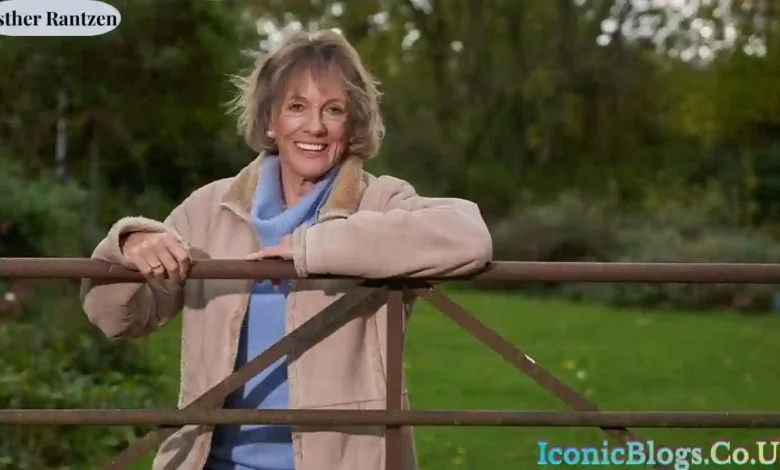
Esther Rantzen was a celebrated British television presenter, journalist and charity campaigner best known for hosting That’s Life! and founding Childline. She died on 30 September 2026, aged 86, following a diagnosis of stage-four lung cancer in 2023. Her work transformed British broadcasting and helped millions, particularly children and older adults, find support when they needed it most.
Known professionally as Dame Esther Rantzen, she spent decades bringing overlooked social issues to public attention. Her career combined investigative journalism, consumer reporting, entertainment and charitable work, giving her an influence that extended far beyond television.
Interest in Esther Rantzen remains strong, with readers searching for information about her death, age, health, daughter Rebecca Wilcox, husband Desmond Wilcox, Jewish background, and estimated net worth. Here is a comprehensive look at her life, career, family and the work that continues to define her legacy.
Esther Rantzen Update Today: What Happened to the Broadcaster?
Esther Rantzen died on 30 September 2026 at 86. She had become a familiar figure in British households through her television career before gaining further recognition for establishing charities that supported vulnerable people.
Her death followed several years of living with advanced lung cancer. In her final years, she also became a prominent campaigner for changing the law on assisted dying in England and Wales.
Her passing was confirmed by her family and acknowledged by Childline, the organisation she founded in 1986. The charity described her contribution as fundamental to its creation and reaffirmed its commitment to supporting children and young people.
The latest news about Esther Rantzen now largely concerns tributes, reflections on her television career and the continuing impact of her campaigning. On 7 October 2026, a Guardian feature reflected on her earlier work establishing the Meet-a-Mum Association, which helped new mothers find friendship and support.
Her story remains important not simply because she was a familiar television personality, but because she used her public profile to address problems that many people found difficult to discuss.
Who Was Dame Esther Rantzen?
Dame Esther Rantzen was born Esther Louise Rantzen on 22 June 1940 in Berkhamsted, Hertfordshire, England. She became one of Britain’s best-known broadcasters and a pioneering figure in television journalism, particularly through her efforts to combine entertainment with public-interest reporting.
Her professional life began at the BBC, where she worked behind the scenes before becoming a recognisable on-screen personality. She eventually developed a style that balanced humour and warmth with a willingness to ask difficult questions.
Her work included investigations into consumer problems, coverage of social injustice and campaigns related to child protection, safety and public health. Rather than limiting herself to presenting programmes, she often helped turn the issues exposed by television reports into practical campaigns.
Quick Facts About Esther Rantzen
| Detail | Information |
|---|---|
| Full name | Esther Louise Rantzen |
| Known as | Dame Esther Rantzen |
| Date of birth | 22 June 1940 |
| Place of birth | Berkhamsted, Hertfordshire, England |
| Date of death | 30 September 2026 |
| Age at death | 86 |
| Profession | Television presenter, journalist and campaigner |
| Famous television programme | That’s Life! |
| Best-known charity | Childline |
| Other major initiative | The Silver Line |
| Husband | Desmond Wilcox |
| Children | Three, including Rebecca Wilcox |
| Education | Somerville College, University of Oxford |
| Known for | Broadcasting, consumer rights and charitable campaigning |
Esther Rantzen Age: How Old Was She When She Died?
Esther Rantzen was 86 years old when she died on 30 September 2026. Born on 22 June 1940, she had lived through major changes in British television, public attitudes towards child protection and the development of several high-profile social campaigns.
Her longevity in broadcasting gave her an unusually wide audience across different generations. Viewers who first knew her from That’s Life! later followed her work on children’s welfare, loneliness among older people and end-of-life care.
Although her later years were affected by serious illness, her influence was not limited to her final years. Many of the causes she championed had been central to her public life since the 1970s and 1980s.
Esther Rantzen’s Early Life and Education
Esther Rantzen grew up in a Jewish family in Hertfordshire and attended school in north London. She later studied English at Somerville College, Oxford, where she developed interests that would support her future work in communication, writing and broadcasting.
Her education helped prepare her for a career that required both clear communication and the ability to understand complicated subjects. She did not begin as an established television personality; instead, she gained experience through production and research work.
After joining the BBC, she worked in roles behind the camera, including sound-effects work and programme research. These early experiences gave her insight into how television programmes were developed and how a story could be presented effectively to an audience.
Her eventual move into presenting opened the door to a career that would last for decades.
Esther Rantzen’s Television Career and the Success of That’s Life!
Esther Rantzen became a household name as the presenter of the BBC programme That’s Life!, which ran from 1973 to 1994. The programme attracted large audiences by mixing consumer investigations, human-interest stories, comedy and reports about important social issues.
Its format allowed viewers to encounter subjects that might otherwise have received little public attention. The programme investigated everyday problems while also examining more serious matters involving health, safety and social welfare.
Rantzen’s presenting style was an important part of its success. She could communicate a serious concern without making the subject inaccessible, helping audiences understand why a seemingly small issue could have wider consequences.
How That’s Life! Made a Difference
The programme was associated with campaigns and public discussions concerning several significant issues, including:
- Consumer protection: Highlighting complaints and problems affecting ordinary households.
- Child safety: Bringing child abuse and other threats to young people’s wellbeing into public discussion.
- Public health: Covering sensitive subjects that were not regularly addressed in mainstream television.
- Road and playground safety: Helping draw attention to preventable injuries and the need for improved safety measures.
- Organ donation: Supporting efforts to increase public awareness and encourage participation.
One of the programme’s most memorable moments involved Nicholas Winton, the British humanitarian who helped children escape German-occupied Czechoslovakia before the Second World War. When Winton appeared on the programme, members of the audience included people whose lives he had helped save.
The emotional reunion became a landmark television moment and demonstrated the programme’s ability to connect individual experiences with wider historical events.
What Did Esther Rantzen Do After That’s Life!?
Rantzen continued working in television after That’s Life! ended in 1994. She presented Esther, hosted Hearts of Gold and appeared in other programmes, while remaining involved in campaigning and public-interest projects.
She also took part in entertainment formats, including Strictly Come Dancing and I’m a Celebrity…Get Me Out of Here! These appearances introduced her to viewers who had not necessarily watched her original BBC programme.
Her career demonstrated that television could provide more than entertainment. In her hands, it could also draw attention to hidden problems, recognise people who had helped others and encourage viewers to support practical change.
Esther Rantzen and Childline: The Charity That Changed Children’s Lives
Childline is one of Esther Rantzen’s most significant achievements. She founded the free, confidential helpline in 1986 after an investigation into child abuse highlighted the need for children to have somewhere safe to turn for help.
A television appeal revealed considerable demand for support, reinforcing the need for a service designed specifically around children’s concerns. Childline offered a route for young people to talk about abuse, bullying, family problems, fear and other difficult circumstances.
The idea was important because children experiencing distress do not always feel able to speak to a parent, teacher or another adult they know. A confidential service can provide an alternative place to ask for help and consider what to do next.
Childline subsequently became part of the NSPCC and developed into an established source of support for children and young people.
Why Childline Remains Important
The charity’s significance lies in the simple principle behind it: children deserve to be heard and taken seriously. Its services give young people an opportunity to discuss their worries with trained counsellors.
Rantzen’s contribution went beyond proposing a helpline. She used her position in broadcasting to explain why the service was needed and to encourage the public to support it.
Her name became closely associated with child protection because she helped turn a difficult subject into a practical response. Childline’s continued work is one of the clearest examples of how her campaigning produced an enduring institution.
The Silver Line: Esther Rantzen’s Work for Older People
Esther Rantzen also devoted considerable energy to improving life for older adults, particularly people experiencing loneliness and isolation. She launched The Silver Line in 2012 to give older people a free and confidential telephone service through which they could find conversation and support.
The initiative reflected her understanding that social isolation can have a serious effect on someone’s daily life. Older people may live alone, have limited contact with family or friends, or find it difficult to build new social connections.
The Silver Line offered a way to talk to someone without needing to arrange an in-person visit or explain their circumstances to a person they already knew. Its work complemented Rantzen’s earlier campaigning by focusing on another group whose needs could be overlooked.
Her work with both Childline and The Silver Line showed a consistent interest in people who might struggle to find support independently.
| Initiative | Founded | Main purpose |
|---|---|---|
| Childline | 1986 | Supporting children and young people who are worried, distressed or in danger |
| The Silver Line | 2012 | Offering conversation and support to older people experiencing loneliness |
| Meet-a-Mum Association (MAMA) | 1979 | Helping new mothers build local networks and friendships |
These initiatives addressed different stages of life, but each reflected the same underlying idea: people should not have to face difficult circumstances entirely alone.
Esther Rantzen Health: What Was Her Diagnosis?
Esther Rantzen announced in 2023 that she had been diagnosed with stage-four lung cancer. The diagnosis marked a significant change in her personal life and brought renewed attention to her views on terminal illness, quality of life and end-of-life choices.
She spoke publicly about her condition, allowing audiences to understand some of the uncertainty and practical difficulties that accompany a serious diagnosis. Her openness also helped bring conversations about dying and palliative care into the public sphere.
In 2025, her daughter Rebecca Wilcox reported that the cancer medication her mother had been taking was no longer working. Later that year, Rantzen said she had stopped receiving cancer treatment.
By September 2026, she had explained that her declining physical strength meant she could no longer travel to Switzerland to pursue her previously stated plans concerning assisted dying. She died later that month.
How Did Esther Rantzen’s Illness Affect Her Campaigning?
Rantzen’s diagnosis intensified her advocacy for changes to the law on assisted dying. She had become increasingly interested in questions surrounding end-of-life care following the death of her husband, Desmond Wilcox, in 2000.
Her personal experience gave the debate a prominent public voice. She argued for greater choice for people facing terminal illnesses, while the subject continued to generate complex legal, ethical, medical and personal disagreements.
It is important to distinguish her stated position from a universal conclusion about terminal illness. People have different circumstances and beliefs, and discussions about end-of-life decisions involve questions of autonomy, safeguards, medical care and protection for vulnerable people.
Whatever their views on the policy debate, many people recognised the courage with which she discussed her own illness publicly.
Esther Rantzen Daughter: Who Was Rebecca Wilcox?
Rebecca Wilcox is one of Esther Rantzen’s three children with her husband, television producer Desmond Wilcox. Rebecca has worked in broadcasting and became publicly known to many people through her own television work and her appearances discussing her mother’s health.
She played an important role in sharing updates about Esther’s condition as the family dealt with her cancer diagnosis. In interviews, Rebecca spoke about the uncertainty of the illness and the significance of spending time together.
Her public comments helped audiences understand how a terminal diagnosis affects not only the person receiving it but also their relatives. At the same time, the family retained a private life beyond the information they chose to share publicly.
Esther Rantzen Daughter Illness: What Is Confirmed?
Searches for “Esther Rantzen daughter illness” can create confusion about which family member was unwell. The widely reported diagnosis of stage-four lung cancer belonged to Esther Rantzen herself, not her daughter Rebecca.
Rebecca gave updates about her mother’s condition, including the loss of effectiveness of the cancer medication. Her involvement in these interviews should not be mistaken for evidence that she had the same illness.
When reading celebrity health stories, it is worth checking whether a report concerns the public figure, their partner or a family member. Headlines and short social media posts can sometimes blur that distinction.
Esther Rantzen Partner: Who Was Her Husband?
Esther Rantzen married Desmond Wilcox, a respected television producer and documentary-maker, in 1977. Their marriage lasted until his death in 2000, when he died following a heart attack.
The couple had three children together. Wilcox was an established figure in broadcasting in his own right, and their shared professional world formed part of their lives together.
Rantzen spoke with affection about her husband after his death. His passing also influenced her later interest in end-of-life care and the experiences of people facing serious illness.
There is no clearly established public record of a later marriage comparable to her relationship with Wilcox. It is therefore more accurate to describe him as her husband and long-term partner than to speculate about an unconfirmed relationship in her final years.
Was Esther Rantzen Jewish?
Yes. Esther Rantzen publicly identified as Jewish and discussed the significance of Jewish family and culture in an interview with The Guardian in 2008. In the same interview, she described herself as an agnostic.
Her background was part of her family history, but her public identity was primarily shaped by her broadcasting and campaigning work. She discussed subjects ranging from consumer rights and child protection to loneliness and the treatment of people facing terminal illness.
Her Jewish heritage and agnostic beliefs are not contradictory: cultural background, family identity and personal religious belief can be distinct parts of someone’s life.
Did Esther Rantzen Smoke?
Questions about whether Esther Rantzen was a smoker became more common after she disclosed her lung cancer diagnosis. However, a lung cancer diagnosis alone does not establish a person’s smoking history.
Reliable public information reviewed for this article does not establish a definitive answer about whether she smoked. Without a trustworthy statement from Rantzen or a clearly documented source, it would be misleading to claim that she was either a smoker or a lifelong non-smoker.
It is important to avoid drawing conclusions about an individual’s past habits solely from a medical diagnosis.
How Much Was Esther Rantzen Worth?
There is no reliably verified public figure that establishes Esther Rantzen’s exact personal net worth. Online celebrity wealth estimates should be treated cautiously when they are not accompanied by credible financial documentation.
She had a long career in television, presenting, journalism and campaigning, which included decades of professional work. However, career longevity does not by itself reveal someone’s savings, property interests, business assets, charitable commitments or financial obligations.
For that reason, it is more accurate to describe her professional achievements than to attach a specific monetary value to her life without solid evidence.
Esther Rantzen’s Final Public Updates and the News Before Her Death
Interest in Esther Rantzen’s last public statements increased during the months before her death. In 2026, she continued to speak openly about the effects of terminal cancer and her campaign for changes to assisted-dying legislation.
One of her most significant late updates came in September 2026, when she explained that she had become too physically fragile to travel to the Dignitas clinic in Switzerland. Her statement described how her health and circumstances had changed over time.
Rantzen died on 30 September 2026. News coverage following her death focused on her family, her career, the charities she founded and her contribution to the national debate over assisted dying.
A later article published on 7 October also revisited her earlier work with the Meet-a-Mum Association. That coverage was a posthumous reflection on her legacy, rather than a new personal update from Rantzen herself.
Esther Rantzen’s Legacy in British Television and Charity Work
Esther Rantzen’s legacy rests on the relationship she built between television and social action. She did not treat broadcasting simply as a way to entertain large audiences; she also used it to draw attention to subjects that needed public scrutiny.
Her work encouraged viewers to take consumer complaints seriously, consider the wellbeing of children and older people, and recognise people who had made a positive difference to others. Through her charities, some of those concerns became lasting sources of support.
Her influence is visible in several areas:
- Television journalism: She helped establish a popular format that combined factual reporting, everyday consumer problems and human-interest stories.
- Child protection: Childline gave children a dedicated route to seek help and became one of her best-known achievements.
- Support for older people: The Silver Line addressed loneliness and the need for accessible conversation and support.
- Public debate: Her willingness to discuss sensitive subjects helped bring difficult social questions to wider audiences.
- Campaigning: She showed how a television presenter could use public recognition to encourage practical responses to social problems.
Rantzen received honours for her services to broadcasting and charity work, including a CBE before she was appointed a dame in 2015. Those honours recognised a career whose impact extended beyond entertainment.
Her life also offers a useful lesson about public-interest communication: explaining a problem clearly can be an important first step towards helping people find a solution.
Frequently Asked Questions About Esther Rantzen
Has Esther Rantzen Died?
Yes. Dame Esther Rantzen died on 30 September 2026, aged 86. She was a television presenter, journalist and charity campaigner best known for That’s Life! and founding Childline.
Is Esther Rantzen Still Alive?
No. Esther Rantzen died in September 2026 following a diagnosis of stage-four lung cancer in 2023.
How Old Was Esther Rantzen?
She was 86 when she died. Her date of birth was 22 June 1940.
What Was Esther Rantzen Famous For?
She was best known for presenting the BBC programme That’s Life! and founding Childline in 1986. She also established The Silver Line, a helpline for older people, and supported numerous public-interest campaigns.
Who Was Esther Rantzen’s Daughter?
Rebecca Wilcox is one of her three children. Rebecca worked in broadcasting and publicly discussed her mother’s health during her battle with cancer.
What Illness Did Esther Rantzen Have?
Esther Rantzen was diagnosed with stage-four lung cancer in 2023. Her condition deteriorated in the years that followed, and she died in September 2026.
Who Was Esther Rantzen’s Partner?
Her husband was television producer and documentary-maker Desmond Wilcox. They married in 1977 and had three children together. Wilcox died in 2000.
Was Esther Rantzen Jewish?
Yes. She publicly described herself as Jewish and culturally connected to her heritage, while also identifying as an agnostic.
Did Esther Rantzen Smoke?
Her smoking history could not be conclusively verified from reliable public information reviewed for this article. Her lung cancer diagnosis alone is not sufficient evidence to establish whether she smoked.
How Much Was Esther Rantzen Worth?
Her exact net worth has not been reliably established in publicly verified financial information. Specific online estimates should not be treated as confirmed figures.
Remembering Esther Rantzen
Esther Rantzen’s life brought together broadcasting, journalism and a long commitment to helping people whose problems might otherwise have gone unheard. From the success of That’s Life! to creating Childline and The Silver Line, she used her public platform to raise awareness and spur action.
Her death in September 2026 marked the end of a remarkable career, but the organizations she helped establish continue to provide support. Her influence can be measured not only through television programs and professional honors, but also through the people she helped because she recognized a need and worked to address it.
Readers interested in her continuing legacy can learn more about Childline, The Silver Line and the charitable work that grew from her campaigning. These organizations remain a practical reminder of the causes she spent much of her life advancing.
Also Read: John Humphrys Wife: Who Was Edna Wilding?