

FCDO Airspace Closure Warnings: What UK Travellers Need to Know Right Now
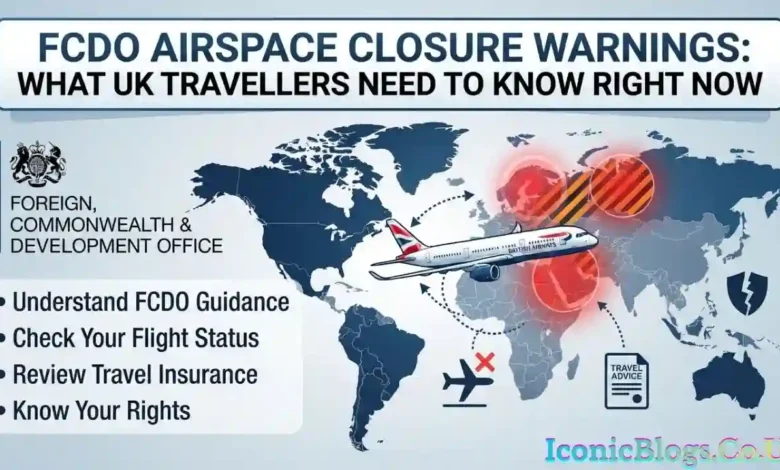
If you’ve booked a trip anywhere near the Middle East, Eastern Europe, or another hotspot region in 2026, there’s a good chance you’ve come across the term “airspace closure” somewhere in the news. And if you’ve gone looking for official guidance, you’ve probably landed on advice from the FCDO — the UK’s Foreign, Commonwealth & Development Office. FCDO airspace closure warnings have become a regular feature of the travel news cycle this year, and understanding what they actually mean can save you from a ruined holiday, an invalid insurance policy, or worse.
This guide breaks down what these warnings are, why they happen, where they’re currently affecting travel, and exactly what you should do if one lands in your inbox.
What Is an FCDO Airspace Closure Warning?
The FCDO is the UK government department responsible for issuing official travel advice to British nationals. It doesn’t run airports or control airspace itself, but when a country’s airspace is closed or restricted, the FCDO typically updates its country-specific travel advice to reflect the risk and the practical disruption travellers might face.
It’s worth understanding that FCDO airspace closure warnings usually sit alongside — but are distinct from — the department’s broader travel advice categories. The two heaviest labels the FCDO uses are “advise against all but essential travel” and “advise against all travel.” These aren’t issued lightly. They’re triggered when officials judge that the risk to British nationals has become genuinely serious, whether from armed conflict, civil unrest, terrorism, or a natural disaster.
An airspace closure, on the other hand, is a more specific and often faster-moving event. A government or aviation authority might shut down its skies for a matter of hours, a few days, or indefinitely, depending on the situation. The FCDO’s job is to translate that into clear, actionable advice for anyone travelling to, through, or near the affected country.
Why Does Airspace Get Closed in the First Place?
There isn’t a single trigger behind airspace closures — several different scenarios can lead to the same outcome.
Armed Conflict and Military Action
The most common driver in recent years has been military escalation. Missile strikes, air defence activity, and the general risk of a civilian aircraft being caught in the crossfire are enough for aviation authorities to shut their skies entirely, sometimes with almost no notice.
Electronic Interference
GPS jamming and spoofing has become a growing concern for pilots and air traffic controllers, particularly near conflict zones. Even when there’s no direct military threat, interference with navigation systems can make flying through certain corridors unsafe enough to warrant a closure or a formal advisory.
Civil Unrest or Sudden Security Incidents
Airspace doesn’t only close because of war. Drone incursions, unexplained security threats, or fast-moving domestic incidents can prompt a temporary shutdown while authorities assess the situation — sometimes reopening within hours once the immediate risk has passed.
Technical or Infrastructure Failures
Less dramatic, but still disruptive: airspace has occasionally been closed due to power failures or equipment faults at air traffic control centres. These tend to be short-lived but can still cause significant knock-on delays.
Where Are Airspace Closures Currently Affecting Travel?
Several regions have seen repeated FCDO airspace closure warnings over the past year, and it’s worth knowing the current picture if you’re planning travel through any of them.
The Middle East
This has been the epicentre of disruption. Escalating tensions between Iran, Israel, and allied forces led to widespread airspace restrictions across the region, with several countries fully or partially closing their skies at various points. Airlines that continued serving the wider area were forced into long detours — often adding several hours to routes between Europe and Asia as they rerouted around the affected zones.
Even Gulf states that haven’t been placed under blanket “do not travel” orders have seen sharper FCDO language warning that regional hostilities could trigger rapid, short-notice airspace closures and flight cancellations. Travellers to popular hubs like Dubai, Doha, or Muscat aren’t necessarily being told to stay away, but they are being told to expect the unexpected — delayed departures, sudden rerouting, or last-minute cancellations.
Eastern Europe
Poland has also featured in recent FCDO airspace closure warnings, after drone incursions linked to the ongoing war in Ukraine prompted a temporary shutdown of parts of its airspace, including major airports. Fighter jets were scrambled to intercept the threats, and while normal operations resumed within hours, the incident was a reminder that disruption isn’t confined to countries directly at war.
Ripple Effects Beyond the Conflict Zones
One of the more overlooked aspects of these warnings is how far their impact travels. Even if your destination isn’t in a restricted zone, your flight might be. Rerouted traffic has piled pressure onto alternative hub airports, pushing up fares and creating knock-on delays across entirely unrelated routes.
How to Check for Live FCDO Airspace Closure Warnings
Given how quickly these situations can change, it’s worth knowing where to look rather than relying on secondhand news.
- The FCDO’s official travel advice pages — searchable by country, and updated as situations develop.
- FCDO email alerts — you can sign up to be notified automatically when advice changes for a specific country.
- Airline and airport status pages — useful for real-time operational updates once a closure is already affecting flights.
- Independent conflict-zone trackers — services that compile aviation safety bulletins can offer useful context, though they shouldn’t replace official FCDO guidance.
Checking these sources in the days leading up to departure — and again the morning of your flight — is a simple habit that can save a lot of stress.
What to Do If You’re Affected by an Airspace Closure Warning
Check Advice for Every Country on Your Route
It’s easy to focus only on your final destination, but transit countries matter just as much. If your layover airport sits inside or near a restricted zone, that’s just as relevant as the advice for where you’re actually headed.
Understand the Insurance Implications
This is one of the most important — and most overlooked — parts of any FCDO airspace closure warning. If the FCDO has advised against travel to a specific country, many standard travel insurance policies become invalid for that destination. It’s worth checking your policy wording carefully and contacting your provider directly if you’re unsure how a current warning affects your cover.
Know Your Rights Around Cancellations
Airlines generally have obligations around rebooking, refunds, or alternative routing when flights are cancelled due to circumstances like these. It’s worth contacting your airline directly rather than assuming a cancellation automatically means a lost fare.
Register Your Travel Details
If you’re already abroad in a country affected by a closure, registering with the local British embassy or consulate, and keeping emergency contact details on hand, is a sensible precaution while the situation develops.
Frequently Asked Questions
Is it safe to fly through airspace near a closure zone? Aviation authorities and airlines actively avoid restricted airspace, so scheduled flights are routed around it. The bigger issue for travellers is usually delay and disruption rather than direct danger, provided you’re following official guidance.
Will my flight be cancelled automatically if there’s a closure warning? Not necessarily. Airlines make their own operational decisions, though they’re heavily influenced by aviation safety bulletins and government advice. Some routes are cancelled outright; others are simply rerouted.
Does FCDO advice override what my airline decides? Not directly — the FCDO doesn’t control flight operations. But its advice shapes insurance validity and is often factored into airline decision-making, so the two are closely linked in practice.
How often is FCDO guidance updated? During fast-moving situations, updates can happen multiple times a day. It’s always worth checking the live page rather than relying on advice you read even a day or two earlier.
Final Thoughts
FCDO airspace closure warnings aren’t just background noise in the news — they carry real, practical consequences for anyone travelling through an affected region. Checking official advice before you book, before you fly, and even during your trip is one of the simplest ways to stay ahead of disruption, protect your insurance cover, and avoid being caught off guard by a situation that can change within hours.
Also Read: Coventry Airport Permanent Shutdown: What Happened and Why It Matters