

Tina Brown Biography, Career, Books, Family, and Media Legacy
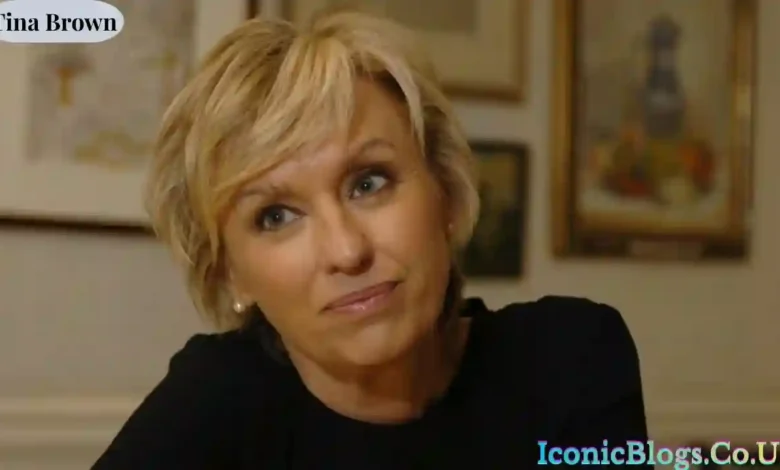
Who Is Tina Brown?
Tina Brown is a British-American journalist, magazine editor, author, and media entrepreneur best known for transforming major publications such as Tatler, Vanity Fair, and The New Yorker. She later founded The Daily Beast, established the Women in the World summit, and became a bestselling author with books exploring the British royal family and her experiences in magazine publishing.
Born Christina Hambley Brown on November 21, 1953, in Maidenhead, England, she developed an international reputation through her distinctive editorial style, instinct for compelling stories, and ability to attract influential writers and public figures. Her career spans traditional print magazines, digital journalism, books, podcasts, and live events.
Brown’s influence extends beyond individual articles or publications. She has helped shape how major magazines present celebrities, politics, culture, and public affairs to readers. Her career also reflects the changing nature of journalism, from the dominance of print magazines to the growth of digital news platforms and independent online publishing.
Tina Brown Age, Birthday, and Early Life
Tina Brown was born on November 21, 1953, in Maidenhead, Berkshire, England. She is 72 years old as of October 2026 and will turn 73 in November 2026. Her birth name is Christina Hambley Brown.
She grew up in a family connected to the film industry. Her father, George Hambley Brown, was a film producer, while her mother, Bettina Kohr, worked in the entertainment world.
Growing up around creative professionals exposed Brown to storytelling and the media industry from an early age. She developed an interest in literature and writing, interests that eventually became the foundation of her professional career.
Education and Early Writing Career
Brown studied English literature at St Anne’s College, University of Oxford. Her time at university helped strengthen her literary interests and provided a foundation for her future work in journalism.
She began contributing to publications while still young, developing experience in writing, editing, and identifying stories that could capture readers’ attention.
Her early work demonstrated an interest in culture, personalities, public affairs, and the social forces that shape public conversation. These interests would become central to her editorial identity.
Brown learned that successful journalism requires more than producing accurate information. It also involves understanding readers, recognising compelling stories, and presenting material in a way that makes people want to engage with it.
Tina Brown’s Career: From Tatler to The New Yorker
Tina Brown’s career stands out because she successfully led several publications with different audiences and editorial traditions. Rather than applying the same formula to every magazine, she adapted her approach to the identity and needs of each publication.
| Year or period | Career milestone | Significance |
|---|---|---|
| 1979–1982 | Editor of Tatler | Gave a traditional British society magazine a more energetic editorial identity |
| 1984–1992 | Editor-in-chief of Vanity Fair | Helped establish the magazine as a major publication covering culture, celebrities, and politics |
| 1992–1998 | Editor of The New Yorker | Introduced changes to a respected literary and cultural magazine |
| 1998–2001 | Leadership at Talk Media | Expanded her involvement in publishing and media |
| 2008–2013 | Founded and edited The Daily Beast | Established a digital news publication |
| 2009 onward | Women in the World | Developed a platform highlighting women’s experiences and global issues |
| 2017 | Published The Vanity Fair Diaries | Shared insights into her years at Vanity Fair |
| 2022 | Published The Palace Papers | Examined the modern British royal family |
| 2020s | Developed independent commentary and journalism initiatives | Continued contributing to public discussions about culture and journalism |
These milestones show how Brown moved between different areas of the media industry while maintaining her interest in influential personalities, major public issues, and distinctive storytelling.
Tina Brown at Tatler
One of Brown’s earliest major editorial achievements came at Tatler, a British magazine associated with society, fashion, and wealthy public figures.
She became editor in 1979 and brought a more energetic approach to the publication. Her version of Tatler combined coverage of prominent people with sharp observations about British society, giving the magazine a distinctive identity.
Brown was still in her twenties when she assumed the role. Her willingness to experiment with tone, subjects, and presentation helped demonstrate that she could do more than maintain an existing publication. She could reshape one.
The experience gave her valuable editorial and management skills. It also prepared her for the considerably larger challenge of leading established American magazines with substantial readerships and strong editorial traditions.
Tina Brown at Vanity Fair
Brown’s move to Vanity Fair marked one of the most important chapters of her career. She became editor-in-chief in 1984, when the magazine was building its identity following its relaunch.
She developed a publication that brought together celebrity profiles, politics, fashion, culture, and long-form journalism. The result appealed to readers interested in entertainment and high society while giving serious reporting a prominent place.
Under Brown’s leadership, Vanity Fair attracted well-known writers, photographers, and contributors. The magazine became recognised for ambitious profiles and stories connecting individual personalities with broader cultural and political developments.
Her approach was not universally popular. Brown’s appetite for celebrity coverage, spectacle, and attention-grabbing stories sometimes created tension with traditional ideas about magazine journalism. Nevertheless, her tenure helped establish Vanity Fair as an influential publication with a recognisable editorial personality.
One of the most important aspects of her success was her ability to combine commercial appeal with editorial ambition. A famous personality might attract readers to a magazine, but strong reporting, distinctive photography, and compelling writing could encourage them to stay.
Her years at Vanity Fair later became the subject of her book, The Vanity Fair Diaries, which offers a personal account of the decisions, relationships, and professional challenges behind the magazine’s development.
Tina Brown at The New Yorker
In 1992, Brown became editor of The New Yorker, a publication with a long tradition of literary writing, cultural criticism, cartoons, and detailed reporting.
Taking over such an established magazine required a different editorial balance from the one she had used at Vanity Fair. The challenge was to make the publication feel contemporary without losing the qualities that had built its reputation.
Brown encouraged greater visual variety, paid attention to current events, and brought new writers and perspectives into the magazine. These changes helped broaden its appeal, although they also prompted debate about its identity.
Some traditional readers and critics objected to aspects of her approach, while others regarded her tenure as an important period of renewal.
This mixture of praise and criticism is central to understanding her legacy. Brown was prepared to risk disagreement rather than leave an established publication unchanged.
Her experience at The New Yorker reinforced an important lesson for publishers: respecting a publication’s history does not necessarily mean preserving every editorial convention. A publication can maintain its core identity while reconsidering how it presents stories and reaches readers.
Tina Brown and The Daily Beast
In 2008, Brown launched The Daily Beast, a digital news publication that brought her editorial experience into the growing online media industry.
The launch represented a shift from leading established print magazines to building a news brand around internet distribution. Digital publishing created opportunities to reach readers quickly, respond to developing stories, and experiment with different types of content.
Brown helped shape the publication’s identity through a mix of politics, current affairs, culture, commentary, and contributions from established writers.
The publication gained industry recognition during its early years, including being named news website of the year in 2012 and 2013.
Her involvement in The Daily Beast reflected a broader transformation in the media business. Readers were increasingly discovering news online rather than waiting for printed issues, and publishers needed to rethink how they attracted attention and maintained loyalty.
Brown’s work demonstrated that her editorial instincts were not limited to traditional magazines. She was willing to test a different publishing model while retaining her emphasis on distinctive voices, influential personalities, and subjects that encouraged discussion.
For aspiring media entrepreneurs, this part of her career illustrates the importance of adapting to new distribution methods without losing sight of editorial quality.
Women in the World: Tina Brown’s Work Supporting Women’s Voices
Brown founded Women in the World in 2009 as a live journalism platform designed to bring attention to women’s experiences, leadership, achievements, and challenges.
The initiative organised public discussions and summits featuring women from politics, journalism, entertainment, business, and activism. Speakers included prominent political figures, cultural personalities, and campaigners working on international issues.
The New York summits at Lincoln Center ran from 2010 to 2020, with events also held internationally. The gatherings explored subjects such as human rights, political change, gender inequality, and the experiences of women living through conflict.
Women in the World expanded Brown’s influence beyond the traditional boundaries of magazine publishing. Instead of simply commissioning articles about important issues, the initiative created public forums where speakers could share their experiences directly with audiences.
The project also reflected a central theme in her career: using editorial judgment and prominent platforms to bring attention to stories that might otherwise receive less coverage.
It demonstrated how journalism can extend beyond written reporting to include public discussion, personal testimony, and conversations between people from different professional and cultural backgrounds.
Tina Brown’s Books and Writing Career
Alongside editing, Tina Brown has built a career as an author. Her books draw on her experience in media, her access to influential public figures, and her interest in the personalities behind major cultural institutions.
Her writing frequently combines research with narrative storytelling. Rather than presenting history as a simple list of events, she explores relationships, rivalries, reputations, and the pressure that public attention places on individuals.
The Diana Chronicles
Published in 2007, The Diana Chronicles is Brown’s biography of Diana, Princess of Wales.
The book examines Diana’s life, her rise to international prominence, her marriage to Prince Charles, and the intense media attention surrounding the British royal family. Brown explores the relationship between the princess’s public image and the private pressures that accompanied royal life.
The subject connected naturally with Brown’s professional experience. As a magazine editor, she had spent years working in an environment where royalty, celebrities, and other prominent figures attracted intense public interest.
For readers interested in Princess Diana, the book offers a detailed account of the woman, the monarchy, and the media landscape surrounding her.
It remains one of Brown’s best-known works and demonstrates her ability to combine biographical research with broader observations about fame, public expectations, and institutional power.
The Vanity Fair Diaries
Published in 2017, The Vanity Fair Diaries: 1983–1992 draws on Brown’s personal records from her years at the magazine.
The book offers an account of editorial decisions, professional relationships, notable assignments, and the pressures involved in producing a major publication. It also describes her experience of building a career in New York after establishing herself in Britain.
For aspiring journalists and editors, one of the book’s main attractions is its behind-the-scenes perspective. It provides insight into the choices and compromises that take place before a finished magazine reaches its audience.
The diary format gives the book a personal dimension. Rather than presenting only a retrospective account of her professional achievements, Brown shares observations about the people, conversations, opportunities, and challenges that shaped her work.
The result is both a record of a particular period in magazine publishing and an account of how an ambitious editor navigated an influential professional environment.
The Palace Papers
Brown published The Palace Papers: Inside the House of Windsor – the Truth and the Turmoil in 2022.
The book explores the British royal family’s experience in the years following the death of Diana, Princess of Wales. It considers the challenges faced by the monarchy as it navigated changing public expectations, family controversies, and an increasingly intense media environment.
Unlike a biography focused on one individual, The Palace Papers examines the wider royal institution and the relationships that influence its public image.
The book also considers how royal traditions interact with contemporary expectations about transparency, family relationships, and public responsibility.
Brown’s interest in the subject reflects a recurring theme across her work: the relationship between private lives, powerful institutions, and public perception.
Tina Brown’s Major Books Compared
| Book | Publication year | Main subject |
|---|---|---|
| The Diana Chronicles | 2007 | Life and public image of Diana, Princess of Wales |
| The Vanity Fair Diaries: 1983–1992 | 2017 | Brown’s experiences leading Vanity Fair |
| The Palace Papers | 2022 | The modern British royal family and its challenges |
Readers who want to understand Brown’s writing can begin with these three titles. Together, they demonstrate her interest in public figures, influential institutions, and the forces that shape public opinion.
Tina Brown’s Husband and Family
Tina Brown married British journalist, editor, and author Sir Harold Evans in 1981. Their marriage lasted until Evans’s death in 2020.
Evans was a respected newspaper editor best known for his leadership at The Sunday Times, where investigative journalism became an important part of the newspaper’s reputation.
Their professional interests overlapped, although each developed a distinct career and body of work. Both were interested in the power of journalism to investigate institutions, explain public affairs, and influence public debate.
Brown and Evans had two children. Their shared life connected British journalism with the American publishing world, particularly after Brown moved to New York to lead Vanity Fair.
Evans’s death was a personal loss for Brown and also influenced her later work honouring his contribution to journalism. Initiatives associated with his legacy include the Truth Tellers investigative journalism summit.
Although Brown’s professional life has placed her in the public eye for decades, she is primarily known for her editorial and literary achievements rather than for the details of her private relationships.
Tina Brown’s Awards and Recognition
Brown’s career has received recognition on both sides of the Atlantic. Her honours reflect her influence in magazine editing and her wider contribution to journalism.
In 2000, Queen Elizabeth II appointed Brown a Commander of the Order of the British Empire, commonly known as a CBE, for services to journalism.
She was also inducted into the Magazine Editors’ Hall of Fame in 2007. The recognition acknowledged her role in shaping major publications and her impact on the profession of magazine editing.
Her professional standing is also reflected in the publications she led, the success of her books, and her work creating public events focused on women’s experiences and investigative reporting.
However, assessing her legacy requires recognising both her achievements and the debate surrounding her editorial decisions. Her leadership brought commercial success and renewed attention to established publications, while some changes to their identity attracted criticism.
That combination makes Brown an important subject for understanding how editorial leadership can influence commercial performance, public image, and a publication’s cultural role.
What Is Tina Brown Doing Now?
Tina Brown remains active in journalism, commentary, publishing-related initiatives, and discussions about the media industry.
One of her recent projects is Fresh Hell: Tina Brown’s Diary, a publication on Substack through which she shares observations about news, politics, culture, and people in the public eye. It provides a direct channel to readers outside the traditional magazine structure.
Brown has also continued supporting investigative journalism through Truth Tellers, a summit created in honour of her late husband, Sir Harold Evans.
In May 2026, Brown co-hosted the Truth Tellers Summit with Reuters and Durham University in London. The gathering brought together journalists, editors, broadcasters, and other media professionals to discuss investigative reporting and the challenges facing journalism.
These projects demonstrate how her career has evolved. Earlier decades centred on leading influential magazines, while her more recent work combines independent commentary with public initiatives supporting journalism.
Brown’s continuing activity also illustrates the changing relationship between journalists and audiences. Writers and editors increasingly use newsletters, podcasts, conferences, and other direct formats alongside conventional publications.
Her work suggests that editorial leadership does not necessarily end when someone leaves a major magazine. Experience, professional relationships, and a strong personal voice can support new ways of contributing to public discussion.
Tina Brown’s Net Worth: What Is Publicly Known?
Tina Brown has spent decades in senior editorial positions, founded a digital news publication, written bestselling books, and developed media events. These activities provide several potential sources of professional income.
However, her exact net worth has not been reliably established through a public financial disclosure. Online estimates should therefore be treated cautiously, particularly when they do not explain their methodology or identify dependable financial records.
Editorial salaries, book royalties, speaking fees, business arrangements, and ownership interests can all affect a media professional’s wealth. Without verified financial information, however, the value of these sources cannot be calculated accurately.
For that reason, assigning Brown a specific dollar figure without credible supporting evidence would be misleading.
Her documented career achievements provide a more dependable way to understand her influence than speculative estimates of personal wealth. Her decades of work across publishing, digital media, and book writing demonstrate a substantial professional career, even though the precise value of her personal assets remains unconfirmed.
What Makes Tina Brown’s Editorial Style Different?
Brown’s career offers useful lessons for anyone interested in media, publishing, or digital content. Three characteristics stand out.
She Understands the Importance of Audience Interest
Brown recognised that readers often approach journalism through subjects they already care about, including famous personalities, social trends, and political controversies.
Her editorial approach used that interest to draw readers toward broader cultural and public-affairs stories. The aim was not simply to chase popularity, but to make meaningful information accessible to audiences.
The lesson for publishers is to understand their audience well enough to present important information in a form that people are motivated to read.
She Is Willing to Challenge Established Conventions
Her changes at Vanity Fair and The New Yorker demonstrate a readiness to question how publications should look, which topics they should cover, and which voices deserve space.
Some of these decisions attracted criticism, but they also made her editorial tenures distinctive.
Leadership sometimes requires balancing respect for an institution’s history against the need to respond to changing readers. Brown’s career shows both the opportunities and the risks involved in making such decisions.
She Has Adapted to New Media Formats
Brown worked in print magazines before moving into digital news and later expanding her work through newsletters and live events.
That progression shows why established media professionals cannot rely on one distribution model indefinitely. Changes in technology, reader habits, and business models can create opportunities for those prepared to reconsider how they work.
Her career is relevant not only to aspiring journalists but also to publishers, content strategists, and media entrepreneurs who want to understand the relationship between editorial quality and audience engagement.
She Combines Editorial Ambition With Commercial Awareness
A publication needs compelling content, but it also needs a sustainable business model. Brown’s career demonstrates an understanding of how editorial identity, reader interest, advertising, and commercial performance can influence one another.
Her approach to celebrity coverage, cultural reporting, and digital news reflected the need to attract audiences while maintaining a recognisable editorial voice.
For people working in publishing today, the wider lesson is that commercial success and editorial substance do not always need to be opposing goals. The challenge lies in building a publication that can attract attention without losing its credibility.
Frequently Asked Questions About Tina Brown
1. Who is Tina Brown?
Tina Brown is a British-American journalist, editor, and author known for leading Tatler, Vanity Fair, and The New Yorker. She also founded The Daily Beast, created Women in the World, and wrote several bestselling books.
2. How old is Tina Brown?
Tina Brown was born on November 21, 1953. She is 72 years old as of October 2026 and will turn 73 in November 2026.
3. Who was Tina Brown’s husband?
Tina Brown was married to Sir Harold Evans, a British journalist, editor, and author. They married in 1981 and remained married until his death in 2020.
4. What books has Tina Brown written?
Her best-known books include The Diana Chronicles, published in 2007; The Vanity Fair Diaries: 1983–1992, published in 2017; and The Palace Papers: Inside the House of Windsor – the Truth and the Turmoil, published in 2022.
5. Is Tina Brown still involved in journalism?
Yes. Brown continues to publish commentary through Fresh Hell: Tina Brown’s Diary and has remained involved in initiatives supporting investigative journalism, including the Truth Tellers Summit.
6. What is Tina Brown best known for?
She is best known for reshaping major magazines, particularly Vanity Fair and The New Yorker, and for combining editorial leadership with ambitious reporting, cultural commentary, and successful book publishing.
7. What is Tina Brown’s net worth?
Her exact net worth has not been reliably confirmed through publicly available financial disclosures. Figures published by unofficial estimation websites should not be treated as verified facts.
8. Where was Tina Brown born?
Tina Brown was born in Maidenhead, Berkshire, England, on November 21, 1953.
9. How many children does Tina Brown have?
Tina Brown and her late husband, Sir Harold Evans, had two children.
10. What is The Palace Papers about?
The Palace Papers is Tina Brown’s 2022 book about the modern British royal family. It examines the House of Windsor, its family relationships, public controversies, and changing position in modern society.
Conclusion
Tina Brown’s career demonstrates how strong editorial judgment, an understanding of public interest, and a willingness to embrace change can shape the media industry. From Tatler and Vanity Fair to The New Yorker and The Daily Beast, she has influenced the way publications approach culture, personalities, and public affairs.
Her books, the Women in the World initiative, and her continuing work with Fresh Hell and Truth Tellers show that her interests extend beyond magazine editing. She remains a notable voice in discussions about journalism, storytelling, and the future of media.
For readers interested in influential editors, media history, or the development of modern journalism, Tina Brown’s career offers a valuable starting point. Explore her books and editorial milestones to better understand the decisions and ideas that have shaped her professional legacy.
Also Read: Stephen Walker: The BBC Journalist, Author and Other Notable Names Explained