
Wollmatten: What They Are, How They Work, and How to Choose the Right One
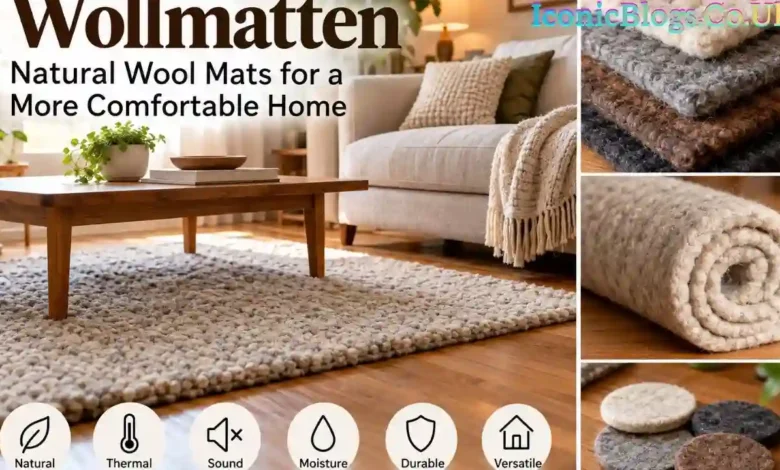
Wollmatten are wool-based mats that serve many purposes, from comfortable floor coverings and felt pads to insulation and sound-control materials. The German term generally refers to wool mats rather than a single product, so the material, thickness, construction, and intended use can vary considerably.
That distinction matters when shopping. A soft decorative wool mat should not be judged by the same standards as a dense felted mat designed for insulation or workshop use.
This guide explains what wollmatten are, how they are made, why wool works well as a mat material, where these mats can be used, their advantages and limitations, and what to check before buying one.
What Are Wollmatten?
Wollmatten is the German plural form associated with wool mats. In practical use, the word can cover products made entirely from wool as well as mats that contain wool together with other fibers, backing materials, dyes, adhesives, or structural components.
The important point is that wollmatten describe a product category rather than a single standardized item.
A wool mat might be:
- A decorative floor mat
- A dense wool felt sheet
- A protective furniture pad
- An acoustic or sound-absorbing material
- A wool-based insulation mat
- A craft or workshop material
- A specialized padding product
The performance of each one depends heavily on its construction.
For example, a thick compressed wool felt mat may provide cushioning and sound reduction, while a woven wool floor mat may be selected mainly for appearance and comfort.
How Are Wollmatten Made?
The manufacturing process influences how a wool mat feels, performs, and should be maintained.
Felted Wool Mats
Felted mats are produced by compacting and interlocking wool fibers. Heat, moisture, pressure, and mechanical action can encourage wool fibers to lock together.
This creates a dense material that can feel firm and resilient.
The scale structure of wool fibers is also important. When untreated wool is exposed to moisture, heat, and agitation, the scales can interlock, causing felting and shrinkage.
This is useful in controlled manufacturing because it allows producers to create stable felted materials. It also explains why careless washing can damage some wool products.
Woven Wool Mats
Woven wool mats are constructed by interlacing yarns or fibers. Compared with dense felt, woven materials can have a more textile-like appearance and may be better suited to decorative interior applications.
The final characteristics depend on the wool grade, yarn construction, weave, backing, thickness, and finishing treatment.
Needle-Punched and Compressed Mats
Some technical wool materials are produced by mechanically entangling or compressing fibers into a dense sheet.
These products can be useful where cushioning, thermal performance, or sound absorption is more important than a decorative finish.
The label alone is not enough to determine performance. Always look at the manufacturer’s specifications and intended application.
Why Is Wool Useful for Mats?
Wool has several natural properties that make it an interesting material for textile and technical applications.
Wool is a natural protein fiber made primarily from keratin. Its structure contributes to moisture management, elasticity, temperature regulation, and durability.
Moisture Management
One of wool’s best-known characteristics is its ability to interact with moisture vapor.
Wool is hygroscopic, meaning it can absorb moisture vapor from its surroundings. Its natural fiber structure allows it to manage moisture without immediately feeling wet.
For a wool-based textile product, this can contribute to a more comfortable microenvironment, although the actual effect depends on the thickness and construction of the mat.
Thermal Performance
Wool fibers have natural crimp, and that structure can trap pockets of still air. This contributes to the insulating behavior associated with wool.
For this reason, specially manufactured wool mats can be used in insulation-related applications. Sheep-wool insulation products, for example, are designed to take advantage of wool’s thermal and moisture-handling characteristics.
A decorative wool rug should not automatically be treated as building insulation, however. Technical insulation requires specific product specifications and installation standards.
Sound Absorption
Dense fibrous materials can help reduce reflected and transmitted sound, and wool-based insulation products can be used for acoustic purposes.
This can make certain wollmatten useful in rooms where controlling echoes or reducing noise transfer is important.
Again, the acoustic effect depends on density, thickness, installation, and the surrounding structure.
Natural Resilience
Wool fibers have a spring-like structure that allows them to bend and recover. This contributes to resilience and shape recovery in wool textiles.
That quality can be useful in mats that experience repeated compression.
Types of Wollmatten at a Glance
Because the term covers several products, it helps to compare the main categories before buying.
| Type | Typical use | Main characteristic | Important buying factor |
|---|---|---|---|
| Wool floor mat | Bedrooms, living areas, offices | Comfort and appearance | Density, backing, size |
| Wool felt mat | Crafts, furniture, protection | Dense and firm structure | Thickness and fiber content |
| Wool insulation mat | Walls, roofs, building applications | Thermal performance | Certified thermal specifications |
| Acoustic wool mat | Sound treatment | Fiber-based sound absorption | Density, thickness and installation |
| Protective wool pad | Furniture, equipment, workshops | Cushioning and protection | Compression resistance |
| Decorative wool mat | Interior styling | Texture and visual appeal | Finish, color and construction |
The most important step is matching the mat to the job rather than choosing solely by the word wollmatten.
Where Can Wollmatten Be Used?
The right wool mat can fit into many settings.
Home Interiors
Wool floor mats can add softness and texture to bedrooms, living rooms, offices, reading areas, and other indoor spaces.
Wool’s natural properties can make it comfortable underfoot, while different weaving and felting techniques allow manufacturers to create anything from very soft surfaces to firm decorative mats.
The backing is particularly important on a floor mat. A beautiful wool surface may still be frustrating to use if it slides, curls, or lacks sufficient structure.
Offices and Workspaces
Wool mats can also be used in offices where cushioning and comfort are useful.
A small wool or felt mat beneath equipment may help protect a tabletop or furniture surface, while larger textile mats can contribute to the visual and acoustic character of a room.
Acoustic Applications
Dense wool-based products may be used in acoustic treatment where the goal is to reduce unwanted reflections or improve the feel of a room acoustically.
For serious soundproofing, however, a decorative wool mat should not be considered a substitute for a properly designed acoustic system.
Insulation Applications
Specialized wool insulation mats are designed for building applications.
Sheep-wool insulation products are valued partly because wool can absorb and manage moisture vapor while maintaining useful insulating characteristics.
For construction work, always check the actual product’s thermal conductivity, fire classification, moisture behavior, installation requirements, and applicable certification.
Furniture and Surface Protection
Dense wool felt can be useful between surfaces where you want to reduce scratches, vibration, impact, or friction.
For example, a properly sized felt pad may be placed beneath furniture legs or equipment.
The goal here is protection rather than decoration, so density and compression resistance usually matter more than softness.
Crafts and DIY Projects
Wool felt is popular for various craft applications because it can be cut into shapes without the same loose-fraying behavior associated with many woven fabrics.
It can be used for pads, organizers, cases, ornaments, liners, and decorative projects.
For crafts, fiber content is especially important. A product advertised as wool felt may contain a percentage of synthetic fibers, so check the label before assuming it is pure wool.
Benefits of Wollmatten
Wool mats can offer several useful qualities, particularly when the material and construction fit the application.
They Use a Natural Fiber
Wool is a natural protein-based fiber produced by sheep. It is also renewable because sheep grow new fleece.
For buyers interested in natural textile materials, this can be an important advantage.
They Can Help Regulate Moisture
Wool can absorb moisture vapor and release it as surrounding conditions change. This property is one reason wool is widely used in applications where comfort and moisture management matter.
They Offer Useful Thermal Properties
Wool’s naturally crimped fibers can trap air, contributing to insulation.
Specialized wool insulation products are designed around this characteristic.
They Can Be Durable
The structure of wool fibers gives them flexibility and resilience. Depending on construction, a well-made wool product can tolerate repeated use without immediately losing its shape.
Durability should still be judged by the actual mat. A thin decorative wool fabric and a heavy technical felt are very different products.
They Can Provide Comfort
For floor applications, wool can offer a warmer and softer feel than many hard flooring surfaces.
This makes wool mats attractive in bedrooms, reading spaces, sitting areas, and other parts of the home where comfort matters.
Potential Drawbacks of Wollmatten
Wool is useful, but it is not automatically the right material for every situation.
Higher Cost in Some Applications
High-quality wool can cost more than basic synthetic fibers.
The final price depends on the wool grade, fiber content, production method, thickness, size, backing, craftsmanship, and certification.
Care Can Be More Demanding
Some wool products cannot tolerate aggressive washing.
Untreated wool can felt and shrink when heat, moisture, and mechanical agitation occur together.
For that reason, care instructions should always be checked before cleaning.
Not Every Wool Mat Is Pure Wool
A product can contain wool without being made entirely from wool.
Synthetic fibers, backing materials, adhesives, and other components can significantly change how a mat performs.
Check the composition instead of relying on marketing language.
Wool Is Not Waterproof
Wool has water-resistant characteristics at the fiber surface, but it is not waterproof. Its internal structure can absorb moisture vapor.
A wool mat exposed to substantial liquid still needs appropriate drying and cleaning.
Performance Depends on Construction
Simply being made from wool does not guarantee excellent insulation, sound absorption, durability, or stain resistance.
Thickness, density, fiber type, backing, finishing, installation, and intended purpose all matter.
Wollmatten vs Synthetic Mats
There is no universal winner between wool and synthetic mats. The right choice depends on what matters most for the specific application.
| Factor | Wool mats | Synthetic mats |
|---|---|---|
| Material origin | Natural animal fiber | Usually manufactured fiber |
| Moisture behavior | Naturally hygroscopic | Depends strongly on fiber type |
| Thermal behavior | Naturally insulating characteristics | Varies by material and construction |
| Acoustic potential | Good in suitable dense/fibrous products | Can also be effective |
| Care | Product-dependent and sometimes delicate | Often easier for heavy-duty use |
| Feel | Often warm and textile-like | Highly variable |
| Composition | May be pure or blended | Usually manufactured fibers |
| Sustainability profile | Renewable and biodegradable fiber | Depends on polymer and recycled content |
The comparison becomes more useful when you define the application first.
A living-room floor mat, acoustic panel, and building insulation product should not be compared using exactly the same criteria.
How to Choose the Right Wollmatten
Before buying, start with the intended use.
1. Decide Where It Will Be Used
Ask yourself whether the mat is intended for:
- A floor
- Furniture protection
- Insulation
- Acoustic treatment
- Crafting
- A workplace
- A specialist application
This immediately narrows your options.
2. Check the Fiber Content
Look for clear information about whether the product is:
- 100% wool
- A wool blend
- Wool felt
- Wool with synthetic backing
- Recycled wool
Do not assume that a product called a wool mat contains only wool.
3. Consider Thickness and Density
Thickness and density can have a major effect on how a mat feels and performs.
A thin mat may work well as a decorative layer, while a dense felt mat may be better for cushioning, protection, or acoustic treatment.
4. Examine the Backing
For floor mats, backing can influence:
- Slip resistance
- Stability
- Durability
- Floor compatibility
- Moisture behavior
A natural wool surface paired with a poor backing may not be a practical choice for everyday use.
5. Check Certifications for Technical Applications
When buying insulation or other performance-critical wool materials, look for recognized specifications and testing rather than relying on general descriptions.
For certified wool products, programs such as Woolmark assess factors including fiber content, durability, colorfastness, and care performance according to their applicable specifications.
6. Match the Mat to the Environment
A mat for a dry bedroom has different requirements from one used in a workshop, damp area, high-traffic entrance, or construction project.
Think about exposure to moisture, dirt, friction, sunlight, pets, furniture weight, and foot traffic before purchasing.
How to Clean and Care for Wollmatten
Care is one of the areas where wool products require a little attention.
The correct method depends on the product, so the manufacturer’s care instructions should take priority.
Vacuum Regularly
For wool floor mats, regular low-intensity vacuuming can help remove surface dust and debris before it becomes embedded.
Avoid aggressive brushing or excessive mechanical action when the product is delicate.
Treat Spills Promptly
When liquid is spilled, absorb it rather than aggressively rubbing it into the fibers.
Wool care guidance generally emphasizes gentle handling and suitable cleaning products.
Avoid Unnecessary Heat and Agitation
Heat, moisture, and agitation can contribute to felting and shrinkage in untreated wool.
This is especially important with felted mats.
Do not automatically use a hot washing cycle simply because the mat appears washable.
Use Suitable Detergent
For washable wool products, Woolmark recommends mild, neutral detergents and advises against bleach and heavy-duty enzyme detergents.
For a large, thick, or specialty mat, follow the manufacturer’s instructions rather than adapting clothing-washing advice without checking.
Dry Carefully
A soaked wool mat can become heavy and distorted.
Drying requirements vary by construction, so follow the care label. Improper drying can affect shape and dimensions.
Common Mistakes When Buying Wollmatten
Several mistakes can lead to disappointment.
Buying Only by Appearance
A mat can look beautiful while being unsuitable for high traffic, moisture, or heavy furniture.
Performance should be considered alongside appearance.
Assuming All Wool Mats Are the Same
A felt pad and a woven rug may both qualify as wool mats, but their uses and care requirements can be completely different.
Ignoring Fiber Blends
A product labeled “wool” may not be pure wool.
Always inspect the material composition.
Using Decorative Mats for Technical Purposes
A decorative floor mat is not automatically suitable for building insulation or professional acoustic treatment.
Technical applications require performance data appropriate to the specific use.
Washing Without Reading the Care Label
This is one of the easiest ways to damage wool.
Some wool products are designed for washing, while others need professional cleaning or limited moisture exposure.
Are Wollmatten Eco-Friendly?
Wool has several environmental characteristics that appeal to people looking for natural materials.
Wool is renewable because sheep produce new fleece, and 100% wool is biodegradable under suitable conditions.
However, it would be misleading to describe every wool mat as automatically sustainable.
The total environmental impact depends on factors such as:
- Farming and land-management practices
- Processing
- Dyeing
- Transportation
- Blended materials
- Synthetic backing
- Product lifespan
- Cleaning requirements
- End-of-life disposal
A wool mat made with a substantial synthetic backing has a different material profile from a pure wool felt product.
The strongest approach is to assess the complete product rather than judging sustainability from the word “wool” alone.
Are Wollmatten Suitable for Allergy-Sensitive Homes?
This depends on the individual, the mat construction, and the environment.
Wool itself is not automatically equivalent to an allergen-free material, and marketing claims should be treated carefully.
For anyone with a known allergy or sensitivity, check the product composition, dyes, backing materials, adhesives, and cleaning requirements.
Regular cleaning also matters because dust and other particles can accumulate in any textile floor covering.
Can Wollmatten Be Used Outdoors?
Only products specifically designed for outdoor conditions should be used outdoors.
Ordinary wool floor mats are generally intended for indoor environments and may not tolerate prolonged exposure to rain, standing water, intense sunlight, dirt, and repeated wet-dry cycles.
If an outdoor application is important, check the manufacturer’s specifications for moisture resistance, UV exposure, drying, and maintenance.
Do not assume that natural wool automatically makes a product suitable for gardens or outdoor surfaces.
How Long Do Wollmatten Last?
There is no single lifespan for wollmatten.
A carefully maintained decorative mat in a low-traffic room may behave very differently from a heavily compressed workshop pad or a specialized insulation product.
The factors that have the greatest influence include:
- Fiber quality
- Mat density
- Construction method
- Thickness
- Foot traffic
- Moisture exposure
- Cleaning practices
- UV exposure
- Compression
- Quality of backing
Proper care can help preserve a wool product, but expected lifespan should be based on the specific product rather than a generic number.
What Should You Check Before Buying?
Use this quick checklist before ordering a wool mat:
Material: Is it pure wool or a blend?
Construction: Is it woven, felted, needle-punched, or compressed?
Purpose: Is it designed for floors, insulation, sound control, protection, or crafts?
Thickness: Is it appropriate for the intended load and use?
Density: Does the manufacturer provide meaningful specifications?
Backing: Will it stay stable on the intended surface?
Care: Can it be cleaned using the method you are prepared to follow?
Certification: Does the product have appropriate testing or certification for a technical application?
Environment: Is it intended for indoor or outdoor use?
Safety: Are fire, moisture, and installation requirements relevant to your application?
These details are much more useful than choosing a product simply because the listing contains the word “wollmatten.”
Frequently Asked Questions About Wollmatten
What does Wollmatten mean?
Wollmatten is a German term used for wool mats. It is a broad description rather than the name of one particular product or standardized mat type.
Are Wollmatten made from 100% wool?
Not always. Some products are made from pure wool, while others combine wool with synthetic fibers, backing materials, adhesives, or other components. Always check the listed material composition.
Are wool mats good for insulation?
Specially manufactured wool insulation mats can provide useful thermal insulation, and sheep-wool insulation products are designed around wool’s natural thermal and moisture-management characteristics.
A normal decorative wool rug should not automatically be treated as building insulation.
Can Wollmatten be washed?
Some wool products can be washed, while others cannot. Wool’s natural scale structure means heat, moisture, and agitation can cause felting and shrinkage in untreated products, so the manufacturer’s care instructions should always be followed.
Are Wollmatten better than synthetic mats?
That depends on the intended use. Wool offers natural moisture management, thermal characteristics, and a distinctive textile feel, while synthetic materials can offer different advantages in areas such as price, heavy-duty durability, water resistance, or easy cleaning. The right choice depends on the product and application.
Final Thoughts on Wollmatten
Wollmatten are best understood as a broad category of wool-based mats rather than a single type of product. Their qualities can range from soft and decorative to dense, protective, acoustic, or insulation-focused depending on how the wool is processed and what the mat was designed to do.
The biggest buying mistake is focusing on the name instead of the specifications. Check the fiber content, construction, density, dimensions, backing, intended application, certification, and care instructions before making a decision.
For everyday home use, appearance, comfort, stability, and maintenance may matter most. For insulation or acoustic projects, documented technical performance should take priority.
Choosing according to the actual job is what makes a wool mat useful rather than simply attractive.
Also Read: Invest in blue flush-mount ceiling lights for a tidy appearance.