

HMRC Savings Tax Letter: What It Means and What to Do Next (2026 Guide)
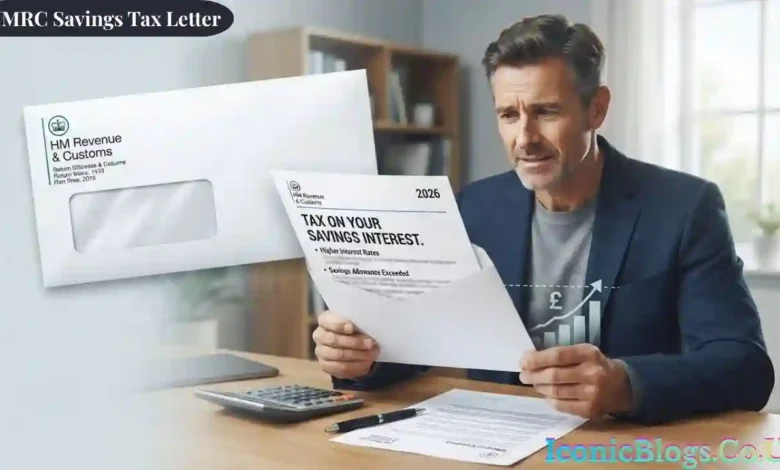
Opening a letter from HM Revenue & Customs is rarely anyone’s favourite way to start the morning. If you’ve recently received one of the growing number of HMRC savings tax letters, take a breath first — it doesn’t automatically mean you’ve done something wrong. It usually just means HMRC believes the interest you’ve earned on your savings has crept past your tax-free allowance, and it wants to settle up.
Thanks to a run of higher interest rates over the past couple of years, ordinary savers who never had to think about tax on their bank balance are suddenly finding themselves in this situation. This guide walks through exactly what these letters are, why they land on your doormat, and what you should do the moment you open one.
What Is an HMRC Savings Tax Letter?
An HMRC savings tax letter (sometimes called a “nudge letter,” a P800 calculation, or a Simple Assessment) is a notice HMRC sends when it believes the interest you’ve earned on your savings has gone above your Personal Savings Allowance. It’s not a formal accusation — think of it more as HMRC flagging a mismatch between what your bank has reported and what your tax record currently shows.
Not every one of the various hmrc savings tax letters in circulation looks the same. Some are purely informational, simply telling you that your tax code is being adjusted. Others ask you to check the figures and respond if something looks off. The wording will usually make clear which category yours falls into, so it’s worth reading the whole letter carefully rather than skimming the first paragraph.
Why Banks Tell HMRC About Your Interest
Here’s the part that surprises most people: you don’t have to declare savings interest yourself in most cases. Banks and building societies are required to send HMRC a yearly summary of the interest paid into every account you hold outside of an ISA. HMRC’s systems then automatically compare that figure against your income tax band and your allowance.
This is precisely why so many hmrc savings account tax letters are being sent out right now. When savings rates were near zero, hardly anyone crossed their allowance. Now that rates have climbed, a decent balance in an ordinary savings account — or, in particular, a fixed-rate bond — can easily tip someone over the line without them ever noticing.
Fixed-rate products deserve a special mention here. Interest on a two- or three-year bond often doesn’t get paid out annually — it rolls up and is credited (and taxed) in the year the bond matures. That means a modest sum locked away for a few years can suddenly generate a lump of interest that blows straight through your allowance in a single tax year, even though you never touched the money.
Understanding the Personal Savings Allowance
The amount of interest you can earn tax-free depends on which income tax band you sit in.
| Tax Band | Annual Income | Tax-Free Savings Allowance |
|---|---|---|
| Basic rate | Up to £50,270 | £1,000 |
| Higher rate | £50,270 – £125,140 | £500 |
| Additional rate | Over £125,140 | £0 |
A few extra points worth knowing:
- Married couples and civil partners can split savings between them, effectively doubling their combined allowance.
- If your non-savings income is below roughly £17,570, you may also qualify for the “starting rate for savings,” which can shelter up to an additional £5,000 of interest.
- Scottish taxpayers still use the rest-of-UK bands for this particular allowance, not the Scottish income tax bands — a detail that trips a lot of people up.
Once your interest goes over your personal threshold, only the amount above the allowance is taxed — not the whole lot.
How Much Tax Will You Actually Pay?
The rate applied to your excess interest simply mirrors your income tax band: 20% for basic-rate taxpayers, 40% for higher-rate taxpayers, and 45% for additional-rate taxpayers, who don’t get any allowance at all.
For example, imagine a higher-rate taxpayer put £3,500 into a three-year fixed bond paying 5%. Over the term, that could generate well over £500 in interest — enough to breach their £500 allowance the moment it’s credited, triggering a 40% tax charge on the excess. It’s a scenario playing out for thousands of savers who assumed a relatively small pot of money was simply too modest to matter.
How HMRC Collects the Money
Once HMRC has worked out that tax is owed, there are generally three routes it takes:
- Tax code adjustment – Your PAYE tax code is tweaked so the extra tax is collected gradually through your salary or pension.
- Simple Assessment bill – You receive a calculation and pay the amount directly, usually by a set deadline.
- Self-assessment – If your total savings interest exceeds £10,000 in a tax year, you’ll need to file a full self-assessment return rather than rely on HMRC’s automatic calculation.
HMRC Pension Savings Tax Letters and Pensioners
It isn’t only working-age savers who get caught out. A growing number of hmrc pension savings tax letters and hmrc pensioner savings tax letters are landing with retirees, particularly those who rely on a State Pension alongside a private pension and modest savings.
Retired people are often more exposed than they realise. A State Pension plus a workplace pension can already use up most of the standard Personal Allowance, leaving less headroom before savings interest becomes taxable — and unlike wages, pension income doesn’t always adjust smoothly through PAYE. If you’re retired and receive one of these letters, it’s worth checking whether your combined pension and savings income has simply grown enough over the past year to cross the threshold, rather than assuming a mistake has been made.
What to Do When the Letter Arrives
- Don’t ignore it, but don’t panic either. These letters are routine, not an enforcement crackdown.
- Check the numbers. Compare the interest figure HMRC has used against your own bank statements or annual interest certificates.
- Confirm your tax band. Make sure HMRC has your income correct, since your allowance depends entirely on it.
- If it looks right, let it run its course. In most cases, HMRC will adjust things automatically and no further action is needed from you.
- If something looks wrong, contact HMRC directly. You can do this through your personal tax account online or by phone, and it’s worth doing sooner rather than later.
Common Mistakes People Make
- Assuming ISA interest counts — it doesn’t. Interest earned inside a Cash ISA is always tax-free and never appears in these calculations.
- Forgetting joint accounts are split — HMRC typically treats interest from a joint account as being earned 50/50 between account holders, which can catch people out when working out their own allowance usage.
- Not realising interest from multiple banks is added together — HMRC aggregates interest across every account you hold, so several small pots can combine into a much larger taxable total.
How to Reduce Tax on Savings in Future
- Use your full ISA allowance. You can currently shelter up to £20,000 a year across ISAs, all of it completely free from tax.
- Split savings between spouses where one partner has more allowance headroom than the other.
- Time fixed-rate products carefully, being aware that interest on longer bonds is often taxed in the year it’s credited rather than spread out.
- Consider Premium Bonds or other tax-free savings products if you’re regularly bumping up against your allowance.
What Happens If You Ignore the Letter
Letting one of these letters sit unopened rarely ends well. Unpaid tax can attract interest charges, and repeated non-response may see HMRC escalate the matter to formal debt recovery. It’s almost always quicker, and less stressful, to deal with it as soon as it arrives.
Frequently Asked Questions
Is this letter a scam? Genuine HMRC correspondence will never ask for bank details or payment via gift cards or unusual payment links. If in doubt, log into your official HMRC personal tax account to verify the figures rather than clicking any links in the letter.
Do I need to declare savings interest myself? Usually not — your bank reports it automatically. The main exception is if your interest exceeds £10,000, which requires a self-assessment return.
What if I’ve actually overpaid? HMRC calculations sometimes go the other way and show you’re owed a refund, which will typically be paid automatically or explained in the letter itself.
Does this affect my ISA savings? No. ISA interest sits completely outside this system and never counts towards your Personal Savings Allowance.
Key Takeaways
A hmrc savings tax letter is far more common these days simply because interest rates have risen, not because HMRC is targeting anyone in particular. Understanding your Personal Savings Allowance, keeping an eye on fixed-rate products, and responding promptly when a letter arrives will keep the whole process straightforward — whether you’re a working saver or a pensioner navigating one of the many hmrc tax savings letters now being sent out across the UK.
Also Read: Save Money with the ECO4 Plan and Get a Free Boiler