
Best Small Business Accounting Software: A Complete Buyer’s Guide
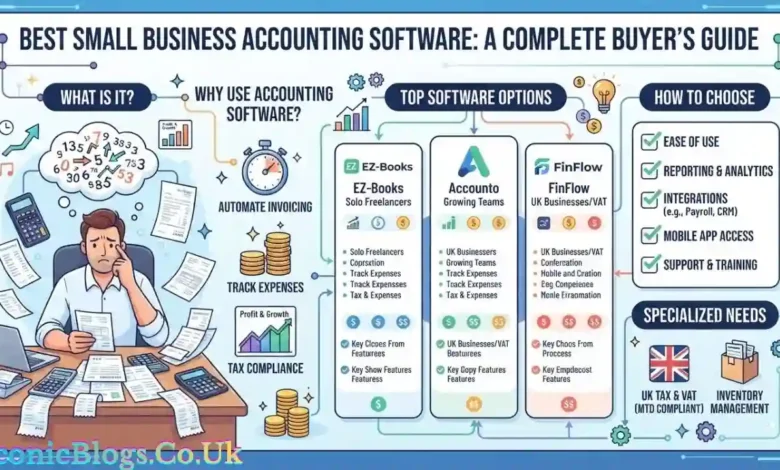
Running a small business means wearing a dozen hats, and “accountant” is usually the worst fit. Between chasing invoices, tracking expenses, and trying to figure out if you actually made a profit last month, bookkeeping can quickly become the task you keep putting off. That’s exactly the gap that good accounting software is built to fill.
This guide walks through the best small business accounting software options available today, how to choose between them, what they cost, and which tool suits which type of business — whether you’re a solo freelancer, a growing team, or a UK-based business with specific tax requirements like VAT and Making Tax Digital.
What Makes Accounting Software “The Best” for Small Businesses?
Before comparing tools, it helps to know what actually matters when picking accounting programs for small business use. Not every business needs the same features, but a few things separate genuinely useful software from a bloated spreadsheet replacement.
Ease of Use
If a tool requires an accounting degree to operate, it defeats the purpose. The best platforms let you send an invoice or log an expense within minutes of signing up.
Core Features
At minimum, look for invoicing, expense tracking, bank reconciliation, and financial reporting. Anything beyond that — payroll, inventory, multi-currency support — depends on how your business operates.
Integrations
Your accounting software should talk to your payment processor, e-commerce store, and payroll system without manual data entry. Poor integration is one of the most common reasons business owners abandon a tool within the first few months.
Pricing That Scales With You
A one-person consultancy and a 15-employee retail shop have very different needs. The right software offers tiered pricing so you’re not paying for features you’ll never touch.
Mobile Access and Support
Being able to snap a photo of a receipt or check your cash flow from your phone matters more than most people expect until they’re standing in line at an office supply store.
Best Small Business Accounting Software: Top Picks
Here’s a breakdown of some of the strongest options on the market, organized by the type of business they suit best.
Best Overall: QuickBooks Online
QuickBooks Online remains one of the most recognized names when people search for the best accounting software for small business operations of nearly any size. It offers robust invoicing, expense tracking, tax preparation tools, and one of the largest integration ecosystems available. The learning curve is slightly steeper than some competitors, but the depth of features makes it worth it for businesses planning to grow.
Best for: Businesses that want an all-in-one solution with room to scale Consider if: You don’t mind a short learning curve for long-term flexibility
Best for Freelancers and Solopreneurs: FreshBooks
FreshBooks is built around simplicity. Invoicing looks professional out of the box, time tracking is built in, and the dashboard doesn’t overwhelm with accounting jargon. It’s a strong pick for service-based freelancers who need to bill clients more than they need complex reporting.
Best for: Freelancers, consultants, and service providers Consider if: You want fast setup over deep customization
Best Free Option: Wave
For businesses just starting out, Wave is consistently mentioned as the best free accounting software for small business owners on a tight budget. It covers invoicing, income and expense tracking, and basic reporting at no cost, with payment processing and payroll available as paid add-ons.
Best for: Startups and very small businesses with simple needs Consider if: You’re comfortable growing into a paid tool later
Best for Growing Teams: Xero
Xero handles multi-user access smoothly, which makes it a favorite among businesses that are expanding beyond a one-person operation. Its reporting tools and third-party app marketplace are particularly strong, and it’s widely used internationally.
Best for: Businesses adding employees or collaborators Consider if: You want unlimited users even on lower-tier plans
Best Value for Money: Zoho Books
Zoho Books offers a surprising amount of functionality — automated workflows, client portals, project tracking — at a lower price point than many competitors. It’s part of the broader Zoho ecosystem, which is a bonus if you already use other Zoho products.
Best for: Budget-conscious businesses that still want automation Consider if: You’re open to a slightly less polished interface
Best for the UK Market: Sage Business Cloud Accounting
For business owners searching for the best small business accounting software UK options, Sage is built specifically with UK tax rules in mind, including full support for VAT submissions and Making Tax Digital compliance. It’s a strong choice among accounting packages for small business owners operating under HMRC requirements.
Best for: UK-based businesses needing built-in compliance tools Consider if: You want software that’s directly aligned with local tax law
Comparing the Options at a Glance
| Software | Best For | Starting Price | Free Trial |
|---|---|---|---|
| QuickBooks Online | Overall/all-in-one | Mid-range | Yes |
| FreshBooks | Freelancers | Low-mid | Yes |
| Wave | Free/basic use | Free | N/A |
| Xero | Growing teams | Mid-range | Yes |
| Zoho Books | Value/budget | Low | Yes |
| Sage | UK compliance | Mid-range | Yes |
Pricing changes fairly often across all providers, so it’s worth checking each company’s current website before committing.
What Is the Best Accounting Software for Small Business Owners in the UK?
This is one of the most common questions UK business owners ask, and the honest answer is: it depends on whether VAT registration, Making Tax Digital, and HMRC integration are priorities. Businesses searching for the best accounting software for small business UK operations often lean toward Sage or Xero, since both offer strong local tax compliance alongside standard bookkeeping features. QuickBooks also has a dedicated UK version with similar compliance support.
What Is the Best Online Accounting Software for Small Business Use?
If accessibility is the priority, cloud-based tools win out over desktop software every time. When people ask what is the best online accounting software for small business needs specifically, they usually mean a platform accessible from any device, with data synced automatically and no manual backups required. QuickBooks Online, Xero, and Zoho Books are all fully cloud-based and update in real time across devices.
Pricing Breakdown: What You’re Actually Paying For
Most bookkeeping software for small business platforms follow a tiered pricing model:
- Free tier: Basic invoicing and expense tracking (Wave is the standout example)
- Starter tier: Core accounting features for solo users or very small teams
- Growth tier: Multi-user access, more advanced reporting, and inventory tracking
- Premium/Enterprise tier: Payroll, advanced automation, and dedicated support
Watch for hidden costs like per-user fees, payroll add-ons, and charges for additional integrations — these can quietly double your monthly bill if you’re not paying attention.
Common Mistakes When Choosing Accounting Software
- Overpaying for unused features. A five-person plan doesn’t make sense for a solo freelancer.
- Ignoring scalability. Switching software later means migrating financial data, which is rarely painless.
- Skipping the free trial. Every platform on this list offers a trial or free tier — use it before committing annually.
- Not checking integrations. If your payment processor or e-commerce platform doesn’t connect, you’ll be stuck with manual entry anyway.
Frequently Asked Questions
What is the best accounting software for small business owners just starting out? Wave or FreshBooks tend to work well for very new businesses because of their simplicity and low (or no) cost.
Is QuickBooks worth it for a small business? For businesses planning to grow or needing detailed financial reporting, yes — its depth of features generally justifies the cost.
Can I do my own bookkeeping without software? It’s possible with spreadsheets, but most owners find that dedicated software saves time and reduces costly errors, especially around tax season.
What’s the best free accounting software? Wave remains the most complete free option currently available for small businesses.
Do I still need an accountant if I use accounting software? Software handles day-to-day tracking, but an accountant is still valuable for tax strategy, filing, and periodic book reviews.
Final Thoughts
There’s no single “best” answer among all the accounting softwares on the market — the right pick depends on your business size, budget, and location. QuickBooks Online suits businesses wanting an all-in-one solution, Wave works well for those just starting out, and Sage or Xero make sense for UK businesses navigating VAT and compliance. Whichever you choose, take advantage of free trials before committing, since switching tools later is far more disruptive than picking carefully now.
Also Read: Who Is Stuart Machin? Inside the Life and Career of the M&S CEO