
Alice Roberts British Academic Anatomist, Archaeologist, Author and Broadcaster
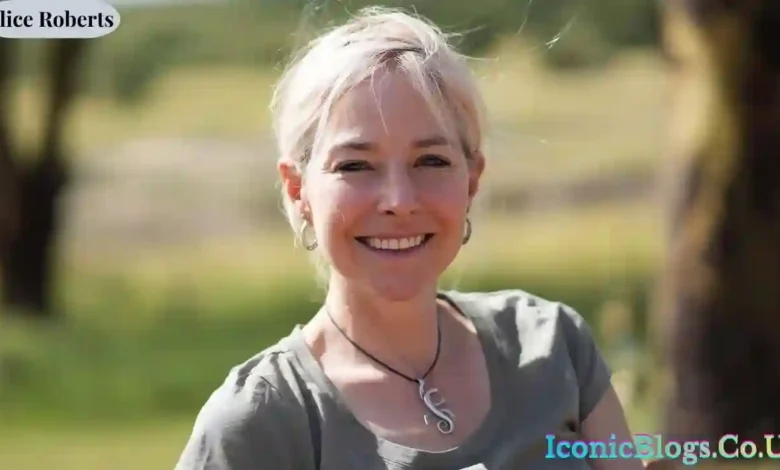
Alice Roberts is a British academic, anatomist, biological anthropologist, author, and television presenter whose career sits at the intersection of human biology, archaeology, evolution, and public education. She is particularly well known for explaining complex scientific and historical subjects to general audiences through books, lectures, documentaries, and archaeological programmes.
At the University of Birmingham, Professor Alice Roberts serves as Professor of Public Engagement in Science, a position she has held since 2012. The university describes her research interests as evolutionary anatomy, osteoarchaeology, and palaeopathology. Her professional journey began in medicine and anatomy before moving further into academic research, teaching, archaeology, and broadcasting.
Who Is Dr Alice Roberts?
Dr Alice Roberts, also widely referred to as Prof Alice Roberts or Professor Alice Roberts, originally trained in anatomy and medicine. She earned a first-class BSc in Anatomy from the University of Wales College of Cardiff in 1994 and qualified in medicine in 1997. After working as a junior doctor in South Wales, she moved into academic anatomy and later completed a PhD in palaeopathology at the University of Bristol in 2008.
Her academic interests help explain why her career has developed across several disciplines. Anatomy provides an understanding of the human body, while osteoarchaeology examines skeletal remains and palaeopathology considers evidence of disease in ancient populations. Together, those fields allow Roberts to investigate questions about health, evolution, human movement, and life in the distant past.
Alice Roberts’ Academic Career
Before joining Birmingham, Roberts spent around 11 years teaching anatomy at the University of Bristol. Her teaching has included topographical anatomy, evolutionary anatomy, embryology, human and vertebrate evolution, osteology, and palaeopathology. She has also supervised postgraduate research in areas involving locomotion and comparative anatomy.
Her appointment at Birmingham represented another important stage in her career. She became the university’s first Professor of Public Engagement in Science, combining academic responsibilities with the broader goal of helping the public understand research. The role reflects a central feature of her work: scientific knowledge is not only produced inside universities but can also be communicated effectively outside them.
Alice Roberts and Human Evolution
Human evolution is one of the strongest themes running through Roberts’ academic and public work. Her background in anatomy gives her a practical perspective on how the human body has changed, while archaeology and biological anthropology provide evidence for understanding ancient populations.
Her 2012 University of Birmingham lecture on The Origins of Us demonstrates this interdisciplinary approach. The lecture explored human anatomy and evolution and drew upon her work as a physical anthropologist.
Roberts’ research interests also include osteoarchaeology and palaeopathology. Ancient bones can contain evidence about injury, disease, physical activity, ageing, and other aspects of past lives. Rather than treating archaeology as simply the discovery of objects, her approach highlights how biological evidence can contribute to a much richer picture of human history.
Alice Roberts’ Archaeological Work
Archaeology became a major part of Roberts’ public profile through television, but it is also closely connected to her academic interests. Her work examines what human remains and archaeological evidence can reveal about populations that left few written records.
The combination of anatomy and archaeology is particularly useful when studying human remains. Skeletal changes can sometimes provide clues about physical stress, disease, injury, or other experiences during life. This makes osteoarchaeology an important bridge between biological science and historical investigation.
The University of Birmingham lists research interests including evolutionary anatomy, osteoarchaeology, and palaeopathology, while Roberts’ publication record includes research relating to ancient skeletons and pathological evidence.
Alice Roberts Books
Alice Roberts books cover subjects ranging from anatomy and human evolution to archaeology and history. Her official biography states that she has authored fourteen popular science and history books, representing a substantial part of her contribution to public education.
One of her best-known titles is The Incredible Unlikeliness of Being, which examines human embryology and evolution and was shortlisted for the Wellcome Book Prize in 2015. Her more recent trilogy, Ancestors, Buried, and Crypt, explores themes surrounding burial archaeology, genetics, life, death, and disease. Roberts’ official site notes that Crypt became a Number One Sunday Times Bestseller.
Her books are valuable for readers who want academic ideas presented in a more accessible form. Instead of separating biology from history, Roberts frequently considers how the two disciplines can inform one another.
TV Shows With Alice Roberts
The phrase TV shows with Alice Roberts covers a broad television career that stretches from early archaeological appearances to major documentary series. Roberts’ official biography says she has presented more than one hundred television documentaries focused on human biology, history, and archaeology.
Her television debut came in 2001 as a human bone specialist on Channel 4’s Time Team. She later presented programmes including BBC Two’s Coast, The Incredible Human Journey, Origins of Us, Ice Age Giants, and Digging for Britain. The University of Birmingham also lists Don’t Die Young, Prehistoric Autopsy, The Celts, Britain’s Pompeii, The Greatest Tomb on Earth, and several Horizon programmes among her broadcasting work.
Digging for Britain Presenter
The Digging for Britain presenter is particularly associated with Roberts because the programme has become one of her longest-running television projects. The series follows archaeological discoveries and research taking place across Britain, allowing viewers to see how experts investigate newly uncovered evidence.
Roberts’ current biography describes Digging for Britain as her longest-running series and states that it has reached its twelfth season. Contemporary programme listings also identify her as the presenter of the series.
Alice Roberts and Roman Empire by Train
Alice Roberts Roman Empire by Train is another example of how her television work combines travel, archaeology, history, and interpretation. The 2026 programme Roman Empire by Train with Alice Roberts follows her exploration of Roman history through locations connected with the ancient empire. Contemporary television listings record Roberts in the presenting role across the series.
The format fits naturally with her broader public-facing work because it allows archaeological and historical questions to be explored through real locations rather than presented only as abstract facts.
Alice Roberts Age and Early Background
Searches such as Alice Roberts age and how old is Alice Roberts commonly arise because of her long television career. She was born in Bristol in 1973, making her 53 in 2026. Her official university profile confirms her academic qualifications and career progression, while other biographical sources record her May 1973 birth date.
Her age, however, is much less significant to her professional identity than the progression of her career—from medical training and anatomy teaching to biological anthropology, archaeology, public engagement, and broadcasting.
Alice Roberts Husband and Marriage
Questions about Alice Roberts husband, husband Alice Roberts, and who is Dr Alice Roberts husband often relate to her personal life rather than her professional work. Public biographical sources identify her husband as David Stevens, a field archaeologist whom she met while studying in Cardiff. They married in 2009.
The connection is notable because archaeology has played a role in both their professional backgrounds. Roberts’ own career later developed into a combination of anatomy, biological anthropology, archaeology, and public communication.
Searches for Alice Roberts and husband therefore intersect with a personal story that has some connection to her professional interests, although Roberts’ public profile remains primarily focused on science, history, education, and broadcasting.
Alice Roberts Husband Photo and Wedding Photos
Search phrases such as Alice Roberts husband photo and Alice Roberts wedding photos reflect public curiosity about her private life. However, personal images should not be treated as authoritative biographical evidence unless they come from a reliable publication or an official source. Roberts’ professional website and University of Birmingham biography focus overwhelmingly on her academic and broadcasting career rather than publishing an extensive collection of private wedding material.
For a reliable biography, professional achievements, qualifications, research, books, and documented television work provide substantially stronger evidence than unverified images circulating online.
Alice Roberts Weight Loss and Net Worth
The searches Alice Roberts weight loss and Alice Roberts net worth are common examples of topics frequently attached to public figures, but they require particular care. There is no reliable basis in the authoritative sources reviewed here for presenting a specific personal weight-loss programme or a verified net-worth figure as established fact.
Roberts’ university profile instead emphasizes anatomy, evolutionary science, archaeology, teaching, research, and public engagement.
That distinction matters. A biography can acknowledge what audiences search for without turning speculation into fact. For Roberts, the strongest documented story is her scientific and educational contribution rather than unsupported claims about finances or appearance.
Achievements and Public Recognition
Roberts has received substantial recognition for both academic work and science communication. The University of Birmingham notes several honorary doctorates, while her official biography records eight honorary doctorates and the Royal Society’s David Attenborough Award for Public Engagement in 2020.
She has also been recognized for communicating anthropology to wider audiences. In 2020, the Royal Anthropological Institute gave her its Public Anthropology Award in recognition of her ability to communicate anthropology to a broad public.
Why Alice Roberts Is Influential
Alice Roberts’ importance comes from the unusual combination of roles she has developed. She is not simply a television presenter discussing archaeology, nor only an academic working within a university. Her career connects medical education, anatomy, biological anthropology, archaeological research, popular science writing, and broadcasting.
That combination gives her a distinctive ability to explain evidence-based ideas about the human past. Her work demonstrates how scientific disciplines can complement historical research, particularly when researchers combine anatomical knowledge with skeletal evidence, archaeology, and evolutionary thinking.
For audiences searching for doctor Alice Roberts, Professor Alice Roberts, or Dr Alice Roberts, the clearest picture is therefore that of an academically trained scientist who has built a second major career in public communication without abandoning her academic interests.
Frequently Asked Questions About Alice Roberts
Is Alice Roberts a doctor?
Yes. She qualified in medicine in 1997 after studying at the University of Wales College of Medicine and later earned a PhD in palaeopathology.
What is Alice Roberts best known for?
She is particularly known for her work as an anatomist, author, biological anthropologist, and television presenter, including Digging for Britain, The Incredible Human Journey, Origins of Us, and other science and history programmes.
How old is Alice Roberts?
Alice Roberts was born in 1973 and is 53 years old in 2026.
Who is Alice Roberts’ husband?
Her husband is David Stevens, a field archaeologist whom she met in Cardiff. They married in 2009.
What are Alice Roberts’ research interests?
Her principal research interests include evolutionary anatomy, osteoarchaeology, and palaeopathology.
Conclusion
Alice Roberts has built a distinctive career by bringing anatomy, human evolution, archaeology, and history into conversation. From her early medical training and years teaching anatomy to her academic role at the University of Birmingham and extensive television work, her career reflects a sustained commitment to understanding—and explaining—the human past.
Whether audiences encounter her through books, university lectures, archaeological programmes, or documentary series such as Digging for Britain, her work remains defined by the same focus: turning specialist evidence into engaging explanations that help a wider public understand science, archaeology, and human history.
Also Read: Michael Aspel Career, Age, Family, Health and Life Now