

Kazuo Ishiguro: Biography, Best Books, Nobel Prize and Literary Legacy
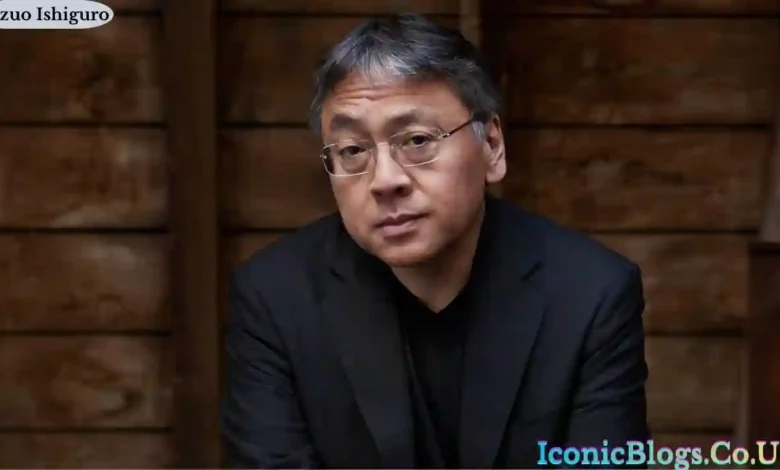
Kazuo Ishiguro is a Japanese-born British novelist, screenwriter, and Nobel Prize-winning author celebrated for his emotionally powerful storytelling. Born on November 8, 1954, in Nagasaki, Japan, he moved to England at age five and became one of the most respected voices in contemporary literature. His best-known novels include The Remains of the Day, Never Let Me Go, and The Buried Giant.
Ishiguro is remarkable for his ability to explore complex human emotions through seemingly ordinary experiences. His characters often struggle with memories, missed opportunities, personal identity, and truths they would rather avoid.
Whether you are discovering Kazuo Ishiguro books for the first time or want to understand his literary achievements, his life and writing offer a fascinating perspective on human nature.
Who Is Kazuo Ishiguro?
Kazuo Ishiguro is a British novelist of Japanese origin whose writing explores memory, regret, love, and the uncertainty of human relationships. He received the Nobel Prize in Literature in 2017 and previously won the Booker Prize for his 1989 novel The Remains of the Day.
Although his early novels were strongly connected to Japan, his later works take place in different countries, historical periods, and imagined worlds. This versatility has helped him build an international readership.
His fiction is especially admired for its understated emotional intensity. Rather than explaining everything directly, Ishiguro allows readers to discover the deeper meaning behind his characters’ words and actions.
Kazuo Ishiguro Biography at a Glance
| Detail | Information |
|---|---|
| Full Name | Sir Kazuo Ishiguro |
| Date of Birth | November 8, 1954 |
| Birthplace | Nagasaki, Japan |
| Age | 71 years (as of October 2026) |
| Nationality | British |
| Profession | Novelist, screenwriter, songwriter |
| Education | University of Kent; University of East Anglia |
| Literary Debut | A Pale View of Hills (1982) |
| Famous Books | Never Let Me Go, The Remains of the Day, The Buried Giant |
| Major Awards | Booker Prize (1989), Nobel Prize in Literature (2017) |
| Wife | Lorna MacDougall |
| Children | One daughter, Naomi Ishiguro |
| Latest Published Novel | Klara and the Sun (2021) |
Kazuo Ishiguro’s Early Life and Childhood
Kazuo Ishiguro was born in Nagasaki, Japan, just nine years after the atomic bombing of the city during World War II. His father, Shizuo Ishiguro, was an oceanographer, while his mother, Shizuko, cared for the family.
In 1960, his family moved to Guildford, Surrey, after his father received an opportunity to work in Britain. The move was initially expected to be temporary, but the family eventually settled permanently in England.
Growing Up Between Japanese and British Cultures
Ishiguro’s childhood combined Japanese family traditions with an English education and social environment. His parents maintained their cultural customs at home, while he grew increasingly familiar with British life.
Interestingly, Ishiguro did not return to Japan until adulthood. Much of his early understanding of the country came from family stories, memories, and the cultural atmosphere of his childhood home.
This unusual relationship with Japan later influenced his fiction. His early novels explore Japanese society through characters whose memories are often complicated by guilt, uncertainty, and changing historical circumstances.
His Interest in Music
Before becoming a successful novelist, Ishiguro dreamed of pursuing a career in music. As a teenager, he played guitar, wrote songs, and admired singer-songwriters such as Bob Dylan.
Music remained important throughout his life. His interest in lyrics, rhythm, and emotional restraint also offers an interesting way to understand his literary style.
Education and the Beginning of His Writing Career
Ishiguro studied English and Philosophy at the University of Kent, graduating in 1978. He later attended the University of East Anglia, where he completed a postgraduate creative writing course.
During this period, he began developing the distinctive narrative voice that would eventually define his novels.
His First Steps as a Writer
Ishiguro initially experimented with short stories. His early writing helped him understand how ordinary conversations and personal recollections could reveal complex psychological experiences.
He eventually began writing about Japan, discovering that the distance between his childhood memories and his adult life in Britain gave him an imaginative setting for fiction.
His debut novel, A Pale View of Hills, appeared in 1982 and received considerable critical attention.
Early Literary Recognition
His second novel, An Artist of the Floating World, was published in 1986 and won the Whitbread Book of the Year Award.
The book established his growing reputation and demonstrated his particular talent for portraying characters who reinterpret their past.
By the end of the 1980s, Ishiguro had emerged as one of Britain’s most promising literary novelists.
Kazuo Ishiguro Books in Order
Readers searching for Kazuo Ishiguro books in order will find that his novels cover a surprisingly broad range of genres. From postwar Japanese fiction to dystopian science fiction, each book offers a different perspective on memory and human experience.
Here is the chronological publication order of his eight published novels.
| Book Title | Publication Year | Main Themes |
|---|---|---|
| A Pale View of Hills | 1982 | Memory, loss, cultural displacement |
| An Artist of the Floating World | 1986 | Guilt, responsibility, postwar Japan |
| The Remains of the Day | 1989 | Duty, regret, emotional repression |
| The Unconsoled | 1995 | Anxiety, identity, uncertainty |
| When We Were Orphans | 2000 | Childhood, memory, belonging |
| Never Let Me Go | 2005 | Love, mortality, humanity |
| The Buried Giant | 2015 | Collective memory, forgiveness |
| Klara and the Sun | 2021 | Artificial intelligence, friendship, love |
Ishiguro has also published Nocturnes: Five Stories of Music and Nightfall (2009), a collection of interconnected stories exploring music and relationships.
His next novel, Miss Lambert Steps Aboard Danger, is scheduled for publication in March 2027. Set in 1938, it follows a mysterious encounter that develops into a comic adventure involving intrigue and travel.
Kazuo Ishiguro Best Books: The Novels Worth Reading
Choosing the best Kazuo Ishiguro books depends largely on your reading preferences. Some readers appreciate his realistic historical fiction, while others prefer his imaginative stories about science, memory, and identity.
The following novels provide the strongest introduction to his literary achievements.
1. The Remains of the Day (1989)
The Remains of the Day by Kazuo Ishiguro is widely regarded as one of his finest literary accomplishments.
The novel follows Stevens, an English butler who has dedicated his life to serving his employer with unwavering professionalism. During a journey through the English countryside, he reflects on his past decisions and the personal sacrifices he made in the name of duty.
As the story develops, readers gradually recognize the emotional consequences of Stevens’s loyalty.
The novel explores how social expectations, personal pride, and emotional restraint can prevent people from recognizing what matters most.
Why readers love it: Its restrained storytelling creates a powerful examination of regret, unspoken love, and lost opportunities.
The novel won the Booker Prize in 1989 and was adapted into an acclaimed 1993 film starring Anthony Hopkins and Emma Thompson.
2. Never Let Me Go (2005)
Never Let Me Go by Kazuo Ishiguro is a haunting novel that combines literary fiction with dystopian science fiction.
The story follows Kathy H., who remembers her childhood at Hailsham, an unusual English boarding school. Through her recollections of friendships with Ruth and Tommy, readers gradually discover unsettling truths about the students’ lives.
Rather than relying on action or elaborate scientific explanations, Ishiguro focuses on relationships, emotions, and the characters’ attempts to find meaning in their limited circumstances.
Major Themes in Never Let Me Go
Human identity: The novel challenges readers to consider what makes someone fully human.
Love and friendship: Kathy’s relationships reveal how emotional connections shape personal identity.
Mortality: The characters’ circumstances raise difficult questions about death, acceptance, and freedom.
Memory: Recollections of childhood become a way of preserving relationships and understanding the past.
The novel was shortlisted for the 2005 Booker Prize and adapted into a 2010 film starring Carey Mulligan, Keira Knightley, and Andrew Garfield.
For readers who enjoy emotionally moving fiction with philosophical questions, Never Let Me Go is an excellent starting point.
3. The Buried Giant (2015)
The Buried Giant by Kazuo Ishiguro takes readers into a mysterious version of post-Arthurian Britain.
The story follows Axl and Beatrice, an elderly married couple who begin a journey to find their son. Their world is affected by a strange mist that causes widespread forgetfulness.
As they travel, they encounter warriors, mythical creatures, and reminders of conflicts that society has largely forgotten.
Memory and Forgetting in The Buried Giant
The novel raises an important question: Is forgetting painful experiences sometimes necessary for peace?
Through its fantasy setting, Ishiguro explores the relationship between personal memory and collective history.
The story also examines forgiveness, conflict, and the uncomfortable consequences of remembering past violence.
Why it stands out: Unlike his realistic novels, The Buried Giant uses fantasy to examine questions about history, relationships, and moral responsibility.
4. Klara and the Sun (2021)
Klara and the Sun explores artificial intelligence through the perspective of Klara, an Artificial Friend designed to provide companionship.
Klara observes human behavior with extraordinary attention, attempting to understand emotions, relationships, and the meaning of love.
When she becomes a companion to a young girl named Josie, her experiences raise questions about technology and what distinguishes humans from intelligent machines.
The novel is especially relevant to modern discussions about artificial intelligence, technological dependence, and emotional companionship.
Its central strength lies in presenting complex ethical questions through a narrator whose understanding of humanity remains incomplete.
5. An Artist of the Floating World (1986)
Set in postwar Japan, this novel follows Masuji Ono, an aging painter who reflects on his artistic career and his involvement in nationalist propaganda before World War II.
Ono struggles to reconcile his earlier beliefs with a society that has dramatically changed.
The novel explores responsibility, shame, and the ways people reinterpret their decisions to protect their self-image.
It is an excellent choice for readers interested in Japanese history and psychologically complex narrators.
6. A Pale View of Hills (1982)
Ishiguro’s debut novel tells the story of Etsuko, a Japanese woman living in England who reflects on her earlier life in Nagasaki.
Her memories of a woman named Sachiko gradually reveal deeper emotional tensions involving motherhood, migration, and personal loss.
The novel introduces several ideas that later became central to Ishiguro’s writing, particularly the unreliable nature of memory.
Its quiet atmosphere and ambiguous storytelling make it rewarding for readers who enjoy thoughtful literary fiction.
Kazuo Ishiguro Books Ranked for New Readers
There is no universally accepted ranking of Ishiguro’s novels. Different books appeal to different readers depending on their interests.
However, the following suggested order balances accessibility, emotional impact, and literary significance.
- The Remains of the Day – Best introduction to his classic literary style.
- Never Let Me Go – Best for emotionally powerful, thought-provoking fiction.
- Klara and the Sun – Best for readers interested in artificial intelligence.
- An Artist of the Floating World – Best for historical and psychological fiction.
- The Buried Giant – Best for readers who enjoy fantasy and philosophical questions.
- A Pale View of Hills – Best for understanding his early literary development.
- When We Were Orphans – Best for readers who enjoy mysteries and complicated childhood memories.
- The Unconsoled – Best for experienced readers interested in experimental fiction.
This is a reading recommendation rather than a definitive judgment of literary quality.
New readers do not need to follow publication order because Ishiguro’s novels are standalone works.
Why Is Kazuo Ishiguro’s Writing So Distinctive?
One of Ishiguro’s greatest strengths is his ability to create emotional tension without dramatic language.
His narrators often describe everyday events calmly, even when those events reveal painful truths.
Readers gradually discover a difference between what characters say, what they believe, and what may actually have happened.
Memory and Unreliable Narrators
Memory is perhaps the most recognizable feature of Ishiguro’s fiction.
His characters frequently recall important experiences while overlooking details that might challenge their understanding of themselves.
In The Remains of the Day, Stevens interprets his professional life through the language of dignity and duty. Yet his recollections reveal emotional sacrifices that he struggles to acknowledge.
This narrative technique encourages readers to question the reliability of personal memories.
Regret and Missed Opportunities
Many Ishiguro characters recognize too late that their choices have shaped their lives in unexpected ways.
They may sacrifice love for professional responsibilities or ignore troubling truths to preserve a sense of security.
These experiences feel familiar because regret is a common part of human life.
Ishiguro rarely offers simple answers. Instead, he allows readers to decide whether his characters could have acted differently.
Identity and Belonging
Questions of identity appear throughout Ishiguro’s work.
His early novels explore cultural and historical change, while later books examine humanity through science fiction and fantasy.
In Never Let Me Go, identity becomes connected to questions about personhood and human dignity.
In Klara and the Sun, readers encounter similar questions through artificial intelligence.
Despite their different settings, both novels explore how individuals understand their place in the world.
Emotional Restraint and Subtle Language
Ishiguro’s prose is generally clear and controlled.
Rather than describing emotions through lengthy explanations, he uses pauses, memories, misunderstandings, and seemingly insignificant details.
This approach creates a distinctive reading experience.
The emotional significance of a scene may become fully apparent only after readers understand the larger story.
Kazuo Ishiguro and the Nobel Prize in Literature
Kazuo Ishiguro received the Nobel Prize in Literature in 2017, becoming internationally recognized for his contribution to modern fiction.
The Swedish Academy praised his ability to explore the uncertainty beneath people’s understanding of their relationship with the world.
The award acknowledged his distinctive storytelling and his exploration of human memory, identity, and emotional experience.
Why Did Kazuo Ishiguro Win the Nobel Prize?
Ishiguro’s literary achievements extend beyond individual bestselling novels.
His work demonstrates how fiction can explore profound human experiences without relying on complicated language or elaborate plots.
He also moves confidently between genres while maintaining a recognizable literary voice.
His stories may take place in an English country house, postwar Japan, or an imagined technological future, but their emotional concerns remain relatable.
The Importance of His Nobel Lecture
In December 2017, Ishiguro delivered his Nobel Lecture, My Twentieth Century Evening – and Other Small Breakthroughs.
He discussed his development as a writer, his early experiences, and the creative discoveries that shaped his fiction.
The lecture also reflected his belief in literature’s ability to encourage empathy and understanding between people.
For students researching Ishiguro’s literary philosophy, the lecture provides valuable insight into his creative process.
Kazuo Ishiguro as a Screenwriter
Although Ishiguro is primarily known for his novels, he has also contributed to film and television.
His screenwriting demonstrates his interest in visual storytelling and emotionally complex characters.
One of his most recognized screenplay projects is Living (2022), a British drama starring Bill Nighy.
The film adapts the story of Akira Kurosawa’s Ikiru into a British setting and follows a civil servant who begins reconsidering his life after receiving a serious medical diagnosis.
Ishiguro received an Academy Award nomination for Best Adapted Screenplay for the film.
Film Adaptations of His Novels
Several of his books have inspired screen adaptations.
The Remains of the Day became a successful film in 1993, earning eight Academy Award nominations.
Never Let Me Go was adapted into a film in 2010, bringing the novel’s emotional and ethical questions to a wider audience.
A Japanese film adaptation of A Pale View of Hills appeared in 2025, while Klara and the Sun has also been adapted for the screen.
These adaptations demonstrate the continuing appeal of Ishiguro’s stories beyond the printed page.
Kazuo Ishiguro’s Awards and Achievements
Ishiguro has received numerous literary honours during his career.
His major achievements include the 1989 Booker Prize for The Remains of the Day and the 2017 Nobel Prize in Literature.
His second novel, An Artist of the Floating World, won the Whitbread Book of the Year Award, helping establish his reputation before his Booker Prize success.
In 2018, Ishiguro received a knighthood for services to literature.
His work has been translated into more than 50 languages, allowing readers across different cultures to engage with his stories.
These achievements reflect his longstanding influence on contemporary literature.
Kazuo Ishiguro’s Wife, Daughter, and Personal Life
Kazuo Ishiguro is married to Lorna MacDougall, whom he married in 1986.
They have a daughter, Naomi Ishiguro, who has also pursued a writing career.
Although Ishiguro is internationally famous, he generally maintains a relatively private family life.
His public discussions tend to focus on literature, creativity, music, and the experiences that influence his writing.
His Connection to Music and Songwriting
Ishiguro’s early ambition to become a musician never disappeared completely.
He has collaborated with jazz singer Stacey Kent, contributing lyrics to her musical projects.
In 2024, The Summer We Crossed Europe in the Rain, a collection of his lyrics written for Kent, was published.
His musical interests are also reflected in Nocturnes, a short-story collection featuring characters whose lives are shaped by musical ambition, love, and disappointment.
Kazuo Ishiguro Net Worth and Sources of Income
Kazuo Ishiguro has enjoyed a successful literary career spanning more than four decades.
His professional earnings have come from book sales, publishing royalties, screenwriting, and other creative work.
However, his exact personal net worth has not been publicly verified through comprehensive financial disclosures.
Online estimates should therefore be treated cautiously rather than accepted as established facts.
His professional success is more reliably demonstrated by his literary awards, international readership, publishing history, and lasting cultural influence.
How Japanese and British Cultures Influenced His Writing
Ishiguro’s background provides an interesting perspective on cultural identity.
Born in Japan and raised in Britain, he grew up with experiences connected to both countries.
His early fiction often uses Japanese settings, while his later novels explore British history and broader questions about human society.
Japanese Influences in His Early Novels
A Pale View of Hills and An Artist of the Floating World examine the emotional consequences of historical change in Japan.
Both novels feature characters attempting to understand their lives after World War II.
However, Ishiguro’s writing should not be understood simply as a direct representation of Japanese cultural traditions.
His fictional worlds are shaped by imagination, literary influences, and his personal relationship with memory.
British Society in His Fiction
The Remains of the Day explores British class structures, professional identity, and the social expectations associated with traditional country-house service.
The novel’s historical setting provides a way to examine loyalty, dignity, and individual responsibility.
Through Stevens, Ishiguro questions whether faithfully following social expectations always leads to a meaningful life.
His ability to portray these different environments illustrates the international scope of his imagination.
What Makes Kazuo Ishiguro Different from Other Novelists?
Ishiguro does not depend on elaborate plots or dramatic confrontations to create emotional impact.
Instead, he carefully reveals how individuals misunderstand themselves and the people around them.
His characters are often unreliable not because they deliberately deceive others, but because they struggle to acknowledge difficult experiences.
This makes his stories psychologically convincing.
Another distinctive quality is his willingness to experiment with literary genres.
The Remains of the Day is historical literary fiction, Never Let Me Go uses dystopian science fiction, and The Buried Giant draws on fantasy.
Yet all three novels explore similar concerns about love, memory, loss, and moral responsibility.
The combination of stylistic consistency and imaginative variety is a major reason for his literary reputation.
Which Kazuo Ishiguro Book Should You Read First?
For most readers, The Remains of the Day is an excellent introduction to Ishiguro.
Its accessible prose, memorable narrator, and emotional complexity provide a clear example of his storytelling approach.
However, the best starting point depends on the type of fiction you enjoy.
Best for Literary Fiction Beginners
Choose The Remains of the Day if you enjoy realistic characters, historical settings, and stories about personal choices.
Best for Science Fiction Readers
Choose Never Let Me Go if you appreciate stories about humanity, ethics, and the consequences of scientific developments.
Best for Technology and AI Enthusiasts
Choose Klara and the Sun if you are interested in artificial intelligence and its potential influence on human relationships.
Best for Fantasy Readers
Choose The Buried Giant if you enjoy mythical settings combined with philosophical questions.
Best for Readers Interested in Japanese History
Choose An Artist of the Floating World for its exploration of postwar Japanese society and personal responsibility.
Regardless of where you begin, Ishiguro’s books reward patient reading and attention to subtle emotional details.
Kazuo Ishiguro’s Influence on Modern Literature
Ishiguro has made a significant contribution to contemporary British and international fiction.
His novels demonstrate that stories can address difficult philosophical questions through ordinary human experiences.
Writers and readers continue to find inspiration in his use of memory, unreliable narration, and emotional understatement.
His fiction is also widely discussed in academic settings, particularly in studies of narrative technique, ethics, and cultural identity.
Why His Stories Remain Relevant
Many issues explored in Ishiguro’s novels are becoming increasingly important.
The development of artificial intelligence has brought renewed attention to the questions raised in Klara and the Sun.
Debates about historical responsibility closely connect to An Artist of the Floating World and The Buried Giant.
Meanwhile, Never Let Me Go continues to encourage discussions about human dignity, scientific ethics, and social inequality.
These connections help explain why his work appeals to readers across generations.
Frequently Asked Questions About Kazuo Ishiguro
Who is Kazuo Ishiguro?
Kazuo Ishiguro is a Japanese-born British novelist and screenwriter who won the Nobel Prize in Literature in 2017. He is best known for The Remains of the Day, Never Let Me Go, and Klara and the Sun.
What are the best Kazuo Ishiguro books?
His most widely recommended novels include The Remains of the Day, Never Let Me Go, Klara and the Sun, An Artist of the Floating World, and The Buried Giant. Each offers a different introduction to his literary themes.
What is Kazuo Ishiguro’s most famous book?
The Remains of the Day and Never Let Me Go are among his most famous novels. The former won the Booker Prize, while the latter is especially celebrated for its exploration of humanity and mortality.
What is Never Let Me Go by Kazuo Ishiguro about?
Never Let Me Go follows Kathy H. as she recalls her childhood and friendships at an unusual boarding school. The novel gradually reveals disturbing truths about the characters’ existence while exploring love, identity, and mortality.
Is Kazuo Ishiguro Japanese or British?
Kazuo Ishiguro was born in Japan but became a British citizen. He moved to England in 1960 and developed his literary career in Britain.
How old is Kazuo Ishiguro?
Kazuo Ishiguro was born on November 8, 1954. He is 71 years old as of October 2026 and will turn 72 in November 2026.
Why did Kazuo Ishiguro win the Nobel Prize?
He received the 2017 Nobel Prize in Literature for his emotionally powerful novels that explore the uncertainty of human experience, memory, identity, and people’s understanding of the world.
What is Kazuo Ishiguro’s writing style?
His writing is known for restrained prose, unreliable narrators, psychological complexity, and the exploration of memory and regret. He often reveals important emotions indirectly.
What is Kazuo Ishiguro’s The Buried Giant about?
The Buried Giant follows an elderly couple traveling through a mysterious post-Arthurian Britain affected by widespread forgetfulness. The novel examines memory, forgiveness, historical violence, and love.
What is Kazuo Ishiguro’s latest book?
As of October 2026, his latest published novel is Klara and the Sun (2021). His next novel, Miss Lambert Steps Aboard Danger, is scheduled for release on March 9, 2027.
Is Kazuo Ishiguro married?
Yes. Kazuo Ishiguro is married to Lorna MacDougall, and they have one daughter, Naomi Ishiguro.
Has Kazuo Ishiguro written screenplays?
Yes. Ishiguro has worked as a screenwriter, including writing the screenplay for Living (2022), which earned him an Academy Award nomination.
Do you need to read Kazuo Ishiguro’s books in order?
No. His novels are standalone stories, so readers can begin with whichever book interests them most. Publication order helps readers study how his writing developed over time.
Conclusion
Kazuo Ishiguro has established himself as one of contemporary literature’s most influential novelists through his remarkable ability to explore memory, love, regret, and human identity.
From the emotional restraint of The Remains of the Day to the unsettling questions raised in Never Let Me Go, his books challenge readers to examine how people understand their lives and relationships.
His Nobel Prize, Booker Prize, and international recognition reflect the lasting importance of his literary achievements.
Also Read: Ambika Mod Boyfriend: Who Is Andy Sellers?