

Rafael Behr: The Journalist Who Turned Political Turmoil Into a Story of Survival
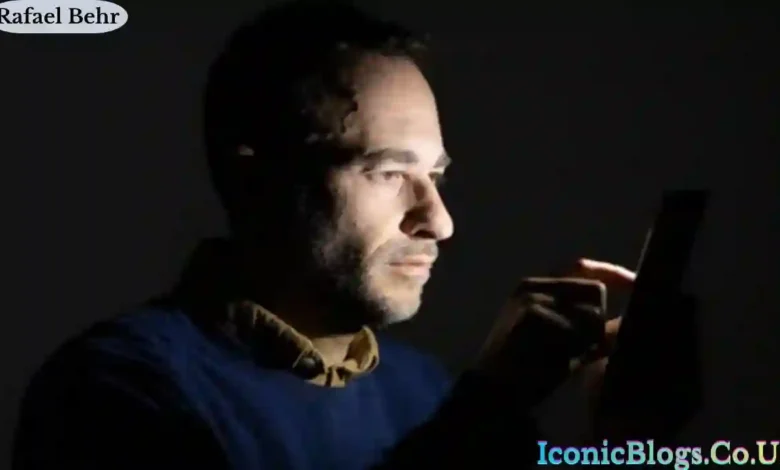
Rafael Behr is a British political journalist, author, and commentator best known for his work as a columnist and leader writer at The Guardian. With a career spanning several prominent British news organisations, including the New Statesman, The Observer, Financial Times, and BBC News, he has established himself as an influential voice in political journalism. His writing examines British politics, democracy, nationalism, Brexit, and the relationship between political power and public trust.
Beyond his professional achievements, Behr has attracted attention for his personal experiences, particularly a heart attack in December 2019 that prompted him to reconsider the emotional pressures of political journalism. His reflections on that experience helped shape his book Politics: A Survivor’s Guide, which explores how people can remain politically engaged without becoming overwhelmed by anger, anxiety, or cynicism.
His career offers an interesting perspective on the changing nature of journalism and the psychological challenges of following politics in an increasingly divided society.
Who Is Rafael Behr?
Rafael Behr is a British journalist specialising in political analysis and commentary. He is widely recognised for his work at The Guardian, where he writes about domestic political developments, international relations, democratic institutions, and the challenges facing modern political systems.
Unlike journalists who primarily report breaking news, Behr is particularly associated with opinion writing. His columns examine the broader meaning of political events, connecting developments in Westminster with historical trends, social attitudes, and international affairs.
His experience extends beyond British politics. Earlier in his career, he worked as a foreign correspondent covering Russia and the Baltic region, gaining an understanding of the political transformations taking place across Eastern Europe.
Behr has also explored the emotional dimension of political life. Through his books, essays, and podcast discussions, he considers how political conflict influences individual wellbeing and public confidence in democracy.
Rafael Behr Biography and Personal Background
Rafael Behr has spent much of his professional life examining political institutions and the people who operate within them. Although he is a familiar name to readers of British political commentary, he has generally kept his personal life separate from his public writing.
His official biography identifies him as a journalist, author, podcast host, and former political risk analyst. It also confirms that he lives in Brighton with his family.
| Personal Detail | Information |
|---|---|
| Full Name | Rafael Behr |
| Profession | Journalist, author, political commentator |
| Nationality | British |
| Known For | Political commentary at The Guardian |
| Education | Merton College, Oxford; University College London |
| Previous Employers | Financial Times, BBC News, The Observer, New Statesman |
| Published Book | Politics: A Survivor’s Guide |
| Podcast | Politics on the Couch |
| Residence | Brighton, England |
| Main Interests | Politics, democracy, European affairs, political psychology |
Rafael Behr Age and Early Life
Behr was 45 when he experienced a heart attack on New Year’s Eve in 2019, as he later explained in a personal Guardian essay. This places his birth around 1974, although his exact birth date is not established in the biographical information reviewed for this article.
His early personal history is less extensively documented than his professional career. However, his academic choices and early employment suggest a longstanding interest in international affairs, languages, and political systems.
Rather than relying on uncertain claims about his childhood or family background, the clearest way to understand his development is through his education and the professional experiences that followed.
Rafael Behr Education and Academic Qualifications
Behr’s academic background played an important role in shaping his approach to journalism.
He studied modern languages at Merton College, University of Oxford, before completing a master’s degree in Russian Studies at the School of Slavonic and East European Studies, University College London.
These qualifications provided a foundation for his subsequent work in international political analysis and journalism.
Studying Modern Languages at Oxford
Studying modern languages involves more than learning vocabulary and grammar. It introduces students to different cultures, historical experiences, political traditions, and ways of interpreting society.
For Behr, this educational background was particularly relevant to his later reporting on European and Russian affairs.
His language studies helped establish the international perspective that continues to appear in his political commentary.
Master’s Degree in Russian Studies
Behr continued his education with postgraduate study in Russian Studies at University College London.
The academic discipline covers Russian history, culture, politics, and the wider regional context.
This background became especially valuable when he worked in political risk analysis and later reported from Russia and the Baltic region.
His career demonstrates how specialist knowledge can help journalists explain international developments to a wider audience.
How Rafael Behr Started His Journalism Career
Before entering journalism, Behr worked as a political risk analyst specialising in Eastern Europe and the former Soviet Union.
Political risk analysis involves examining how government decisions, institutional changes, elections, and international developments might affect businesses, organisations, and societies.
This work required research, interpretation, and an understanding of political uncertainty.
Those skills transferred naturally into journalism, where complex developments must be explained accurately and accessibly.
Working as a Financial Times Correspondent
One of Behr’s important early journalism roles was as a foreign correspondent for the Financial Times, covering Russia and the Baltic region.
This work placed him in a part of Europe shaped by the consequences of the Soviet Union’s collapse, changing political relationships, and debates about national identity.
Reporting on international affairs requires an ability to understand both individual events and the broader political circumstances behind them.
Behr’s experience in the region helped establish his expertise in European politics and international relations.
Journalism at BBC News
Behr subsequently worked as a business news reporter for BBC News online.
Business journalism often requires the ability to explain complicated economic and political developments in straightforward language.
His work at the BBC added another dimension to his experience, combining economic reporting with the political knowledge he had developed earlier.
Together, these roles prepared him for the editorial and political commentary positions that later brought him wider recognition.
Rafael Behr Guardian Career and Political Commentary
The rafael behr guardian connection is central to his public profile. Behr joined The Guardian as a political columnist in June 2014, after serving as political editor of the New Statesman.
The appointment marked an important stage in his career.
At The Guardian, he was expected to write a regular Westminster-based column alongside reported essays and commentary on political developments.
His work has since explored major changes in British and international politics, including Brexit, party leadership, European integration, and the influence of nationalist movements.
Joining The Guardian in 2014
The Guardian formally announced Behr’s appointment in May 2014.
His background in political reporting, editorial writing, and international journalism made him well suited to a role requiring both immediate political analysis and longer-term interpretation.
Rather than simply describing events, his columns investigate the motives, contradictions, and consequences behind political decisions.
This analytical approach has remained an important feature of his writing.
What Makes His Political Writing Distinctive?
Behr frequently examines politics through the relationship between institutions, public attitudes, and individual behaviour.
His columns often focus on several connected questions: why political movements attract support, how leaders communicate with voters, and what happens when trust in established institutions begins to weaken.
He also pays attention to the emotional appeal of politics.
Fear, resentment, belonging, optimism, and frustration can influence political decisions as much as economic arguments or policy details.
By examining these factors, his writing seeks to explain not only what politicians are doing but also why their messages resonate with particular audiences.
Rafael Behr and Brexit Coverage
Brexit has been a recurring subject in Behr’s political commentary.
The United Kingdom’s decision to leave the European Union created significant questions about sovereignty, national identity, economic relationships, and Britain’s international position.
Behr has written critically about Brexit and the arguments surrounding Britain’s relationship with Europe.
His commentary often considers how the referendum affected political institutions, party loyalties, and public debate.
This subject also connects to his wider interest in nationalism and the relationship between political identity and democratic participation.
Rafael Behr’s Work at the New Statesman and The Observer
Before becoming a Guardian columnist, Behr held important positions at two other established British publications.
He served as political editor of the New Statesman and previously worked as chief leader writer and online editor at The Observer.
These roles required different but complementary journalism skills.
Political editing involves monitoring developments, assessing their significance, and presenting informed analysis. Leader writing, meanwhile, requires clear arguments about important public issues.
Political Editor at the New Statesman
The New Statesman is a British publication known for political reporting, opinion, and cultural analysis.
As political editor, Behr worked in an environment closely connected to Westminster debates and the broader direction of British politics.
His experience there helped develop his reputation as a commentator capable of examining political events beyond the immediate headlines.
Editorial Experience at The Observer
At The Observer, Behr held senior editorial responsibilities.
His work included developing editorial arguments and contributing to the newspaper’s political perspective.
The experience strengthened his ability to write concise, persuasive analysis while considering different aspects of public debate.
Major Stages of His Journalism Career
| Organisation | Position or Area of Work |
|---|---|
| Political Risk Analysis | Eastern Europe and former Soviet Union |
| Financial Times | Foreign correspondent covering Russia and the Baltic region |
| BBC News | Business news reporter |
| The Observer | Chief leader writer and online editor |
| New Statesman | Political editor |
| The Guardian | Political columnist and leader writer |
These positions demonstrate the breadth of Behr’s experience across reporting, editing, analysis, and commentary.
Rafael Behr Heart Attack: What Happened in December 2019?
The rafael behr heart attack story is one of the most personal subjects he has discussed publicly.
On December 31, 2019, Behr experienced a heart attack while jogging near his home in Brighton. He was 45 years old at the time.
The incident became an important moment in his life, prompting him to reflect on his health, professional pressures, and relationship with political events.
He later described the experience in a personal essay published by The Guardian in January 2021.
Early Symptoms and Warning Signs
In his account, Behr explained that he had previously experienced uncomfortable chest sensations while exercising.
He had interpreted those symptoms as ordinary signs of being unfit or getting older.
During his run on New Year’s Eve, however, the symptoms became much more severe.
He experienced significant chest pain, difficulty breathing, and a strong sense that something was wrong.
Behr sought medical attention and was taken to hospital, where the seriousness of his condition became clear.
His account illustrates how dangerous it can be to dismiss persistent physical symptoms.
Chest pain, shortness of breath, and related warning signs can indicate a medical emergency. Anyone experiencing possible heart attack symptoms should seek emergency medical assistance rather than assuming they are caused by stress or poor fitness.
Did Political Stress Cause Rafael Behr’s Heart Attack?
Behr has publicly reflected on the psychological strain associated with covering intense political events.
In particular, he discussed the pressures surrounding Brexit and years of political conflict in Westminster.
However, it would be inaccurate to claim that journalism or political stress was medically established as the sole cause of his heart attack.
Heart disease can involve multiple risk factors, including inherited conditions and other aspects of cardiovascular health.
Behr’s personal reflections explore how his emotional relationship with politics may have affected his wellbeing, rather than providing a definitive medical explanation.
How the Experience Changed His Perspective
After his heart attack, Behr began thinking differently about the relationship between political engagement and personal wellbeing.
Before the incident, the constant tension and urgency of political journalism had been an important part of his professional life.
The health emergency encouraged him to reconsider the emotional cost of remaining immersed in political conflict.
His subsequent writing explores whether people can care deeply about democracy without allowing political disagreements to dominate their mental and emotional lives.
This question became central to his later book.
Politics: A Survivor’s Guide by Rafael Behr
In 2023, Behr published Politics: A Survivor’s Guide, a book examining political anger, democracy, identity, and the psychological challenges of contemporary public life.
The book draws on his journalism experience and personal reflections.
Rather than treating politics as a purely institutional process, Behr considers how political events affect the emotions and identities of ordinary people.
What Is the Book About?
The central concern of Politics: A Survivor’s Guide is how people can remain politically involved without becoming overwhelmed by the hostility and anxiety that often accompany public debate.
The book examines nationalism, migration, belonging, political identity, and the erosion of trust.
It also discusses the difference between healthy political disagreement and the kind of constant antagonism that damages democratic relationships.
Behr explores why political debates can feel intensely personal, even when they concern decisions made by distant institutions.
Politics, Identity and Belonging
One of the book’s major themes is the role of identity in political behaviour.
People do not always approach political questions as detached observers comparing policies.
Their attitudes can be influenced by culture, community, personal experiences, and feelings of belonging.
These emotional connections help explain why political disagreements sometimes become so difficult to resolve.
Behr considers how democratic societies can acknowledge these feelings without allowing them to undermine mutual respect and cooperation.
Why the Book Matters
The book is relevant to readers who feel exhausted by political arguments or uncertain about how to remain engaged in public life.
Its broader message is that political participation should not require constant anger or pessimism.
Democratic systems depend on citizens who are willing to question authority, consider evidence, and participate in public debate.
However, participation becomes more difficult when political disagreement is experienced as an endless personal confrontation.
Behr’s book encourages readers to reconsider how they respond emotionally to politics while maintaining an interest in democratic institutions.
Rafael Behr and the Politics on the Couch Podcast
Beyond newspaper journalism and books, Behr hosts the podcast Politics on the Couch.
The podcast examines the relationship between psychology and political behaviour.
This approach reflects his interest in the emotions and motivations that shape political opinions.
Understanding the Psychology of Politics
Political analysis often concentrates on elections, economic policies, parliamentary votes, and party strategies.
Psychological analysis asks additional questions.
Why do voters identify so strongly with particular political movements? Why can disagreement feel threatening? How do personal experiences shape attitudes towards authority and institutions?
These questions help explain why political behaviour cannot always be understood through policy arguments alone.
How the Podcast Complements His Journalism
Behr’s podcast provides another setting for examining the ideas that frequently appear in his columns.
While newspaper commentary responds to particular events, podcast discussions can explore the psychological patterns behind political conflict in greater depth.
The format also allows audiences to consider how political identity, anxiety, anger, and trust influence public life.
For readers familiar with his Guardian columns, the podcast offers a different way to engage with his interests and analytical approach.
Rafael Behr Wife, Marriage and Family Life
Rafael Behr maintains a relatively private family life despite his public career.
His official biography confirms that he lives in Brighton with his family.
He has also referred to his wife in his own writing, including his account of the symptoms he experienced before his heart attack.
However, the publicly available sources reviewed for this article do not establish his wife’s name or provide detailed information about their marriage.
Is Rafael Behr Married?
Yes. Behr has publicly referred to his wife in his personal writing.
Although his professional life is well documented, he has not made his marriage a major subject of his public profile.
This distinction is important because being a public commentator does not necessarily mean every aspect of a person’s family life is publicly documented.
Does Rafael Behr Have Children?
Behr’s official biography refers to his family, but it does not provide sufficient information to establish the number or identities of his children.
Without reliable public confirmation, claims about his children should not be presented as established facts.
Where Does Rafael Behr Live?
Behr lives in Brighton, a coastal city in southern England.
He has referred to the city in his personal writing, including his account of the events surrounding his heart attack.
Brighton provides the background to some of his reflections on health, everyday life, and balancing professional responsibilities with personal wellbeing.
Rafael Behr Political Views and Public Commentary
Behr’s published columns provide considerable insight into his political analysis.
He frequently writes about democracy, European relations, nationalism, populism, and the responsibilities of political leaders.
His work is often critical of political movements that he believes threaten institutional stability or exploit social divisions.
However, a journalist’s published opinions should not automatically be treated as proof of formal party membership or personal political affiliation.
Views on Democracy and Political Institutions
A recurring concern in Behr’s writing is the importance of democratic institutions.
Elections are essential to democracy, but functioning democratic systems also depend on independent institutions, accountability, legal safeguards, and a degree of public trust.
His commentary considers what happens when political actors challenge those expectations.
He is particularly interested in the way mistrust can weaken democratic participation and create opportunities for more confrontational political movements.
Commentary on Nationalism and Populism
Nationalism and populism frequently appear in Behr’s analysis.
He examines why movements built around national identity, political frustration, or opposition to established institutions can attract public support.
His columns also consider how political leaders use language and symbolism to create emotional connections with voters.
This approach places political rhetoric within a broader discussion of social attitudes and democratic stability.
British Politics and International Relations
Behr regularly connects British political developments with international events.
His background in Russian and European affairs gives him a basis for examining the relationship between domestic politics and geopolitical change.
He has written about the United Kingdom’s relationship with Europe, Russia’s influence, American politics, and the challenges facing European democracies.
These subjects demonstrate that his journalism extends beyond Westminster and incorporates international political developments.
Rafael Behr’s Recent Journalism in 2026
Rafael Behr continues to contribute political commentary to The Guardian in 2026.
His recent columns address political leadership, international relations, public trust, and the challenges posed by populist movements.
During October and November 2026, his published work included commentary on Brexit, Russia, European political instability, and American influence on international affairs.
Recent Political Themes
Several themes continue to shape his journalism.
Democratic stability: Behr examines the pressures facing political institutions and the conditions necessary to maintain public confidence.
European politics: His work discusses political developments across Europe and the relationship between national governments and wider regional institutions.
Populism and political identity: He considers the appeal of political movements that challenge established parties and present themselves as alternatives to traditional leadership.
International relations: His commentary explores how developments in the United States, Russia, and Europe influence British politics.
Why His Commentary Remains Relevant
Modern political debates are increasingly shaped by international events, digital communication, and changing public expectations.
Journalists who can connect individual developments to broader institutional and historical patterns offer readers additional context.
Behr’s combination of foreign correspondence, editorial experience, and political commentary enables him to examine these connections from several perspectives.
Readers may agree or disagree with his conclusions, but his work offers arguments that can be evaluated against the evidence and alternative political interpretations.
Rafael Behr Net Worth and Professional Income
Some readers searching for Rafael Behr’s biography may also be interested in his net worth.
However, there is no sufficiently reliable, publicly verified figure available in the sources reviewed for this article.
It would therefore be misleading to provide a precise estimate of his personal wealth.
His professional activities include newspaper journalism, book authorship, podcasting, broadcasting contributions, and public speaking.
These activities may provide income, but their existence does not establish his earnings, assets, or net worth.
Accurate financial claims would require trustworthy disclosures or other verifiable evidence.
Rafael Behr’s Influence on British Political Journalism
Behr’s career reflects the changing responsibilities of political journalists.
Traditional political reporting focuses on informing audiences about government decisions, elections, legislation, and political developments.
Opinion journalism adds interpretation, examining the significance of those events and presenting arguments about their consequences.
Behr has worked across both reporting and commentary, giving him experience with these different approaches.
Connecting Domestic Politics With International Events
His earlier work in Eastern Europe and Russia has contributed to an international perspective on political affairs.
This is particularly valuable when examining subjects such as Brexit, European security, and relations between democratic and authoritarian governments.
Domestic political decisions rarely occur in isolation.
Economic relationships, international institutions, historical experiences, and geopolitical pressures can all influence national policy.
Behr’s journalism regularly draws attention to those connections.
Bringing Personal Experience Into Political Analysis
Another distinctive element of his work is his willingness to discuss the relationship between politics and emotional wellbeing.
His experience of a heart attack encouraged him to reconsider the psychological demands of political engagement.
Rather than abandoning political commentary, he incorporated questions about stress, identity, and emotional resilience into his broader analysis.
This perspective helps connect political journalism with concerns that extend beyond professional politics.
What Readers Can Learn From His Career
Behr’s professional development offers several useful lessons for aspiring journalists.
Specialist academic knowledge can provide a foundation for reporting on complicated subjects. Experience across different types of journalism can also improve a writer’s ability to interpret information.
His career demonstrates the value of combining factual understanding with clear explanations.
It also suggests that successful political commentary requires more than strong opinions. Journalists must understand historical context, acknowledge uncertainty, and distinguish evidence from interpretation.
Frequently Asked Questions About Rafael Behr
Who is Rafael Behr?
Rafael Behr is a British journalist, author, and political commentator known for his work as a columnist and leader writer at The Guardian. His journalism focuses on British politics, democracy, European affairs, and international relations.
Does Rafael Behr work for The Guardian?
Yes. As of November 2026, Rafael Behr continues to publish political commentary at The Guardian. He joined the newspaper as a political columnist in June 2014.
How old is Rafael Behr?
Behr stated that he was 45 when he suffered a heart attack on December 31, 2019. This suggests that he was born around 1974, although his exact date of birth has not been reliably established in the sources reviewed.
What happened during Rafael Behr’s heart attack?
Behr experienced a heart attack while jogging in Brighton on New Year’s Eve 2019. He later wrote about the symptoms, hospital experience, and changes in perspective that followed the incident.
Did stress cause Rafael Behr’s heart attack?
Behr has discussed the emotional pressures associated with political journalism, but it is not established that work-related stress was the sole medical cause of his heart attack. Cardiovascular conditions can involve several contributing factors.
Is Rafael Behr married?
Yes. Behr has publicly referred to his wife in his personal writing. However, detailed information about his marriage is not widely documented in reliable public sources.
Who is Rafael Behr’s wife?
The name and personal background of Rafael Behr’s wife have not been reliably established in the sources reviewed for this article.
Where does Rafael Behr live?
Rafael Behr lives in Brighton, England, according to his official biography.
Where did Rafael Behr study?
He studied modern languages at Merton College, Oxford, and completed a master’s degree in Russian Studies at University College London.
What is Rafael Behr’s book called?
His book is titled Politics: A Survivor’s Guide. Published in 2023, it explores political identity, nationalism, democratic trust, and the emotional pressures associated with modern politics.
What is Politics on the Couch?
Politics on the Couch is a podcast hosted by Rafael Behr that examines politics through psychological ideas and discussions about human behaviour.
What is Rafael Behr’s net worth?
No reliable, publicly verified estimate of Rafael Behr’s net worth was identified in the sources reviewed.
What are Rafael Behr’s main political interests?
His journalism frequently addresses British politics, Brexit, European relations, nationalism, populism, democratic institutions, and international affairs.
Final Thoughts on Rafael Behr’s Life and Journalism Career
Rafael Behr has built a respected career through political reporting, editorial writing, and commentary on some of the most difficult questions facing modern democracy.
His professional journey has taken him from political risk analysis and foreign correspondence to senior editorial positions and a longstanding role at The Guardian.
His experience of a heart attack in 2019 added a personal dimension to his work, encouraging deeper reflection on the relationship between political conflict, emotional wellbeing, and democratic participation.
Through his columns, book, and podcast, Behr continues to examine not only what happens in politics but also why political events affect people so deeply.
Also Read: Charlie Peters GB News Wife: The Truth About His Marriage, Partner and Personal Life